California Class C Motorhome Lemon Law Attorney
Thor, Coachmen, Forest River, Winnebago — your Class C motorhome keeps going back. Jeff Le Pere knows every manufacturer tactic. Free review. Zero cost.
California lemon law protects Class C motorhome owners under the Song-Beverly Consumer Warranty Act for the cutaway chassis — Ford E-Series, Ram ProMaster, Chevy — and under the Magnuson-Moss Warranty Act for the coach body, including the distinctive cab-over section. If your Class C has endured multiple failed repairs for the same defect, or has spent 30 or more days at the dealer, you may be entitled to a full repurchase, replacement, or settlement. Jeff Le Pere spent over a decade on the manufacturer's side of these claims. Free case review. Zero cost to you.
Does California Lemon Law Cover Class C Motorhomes?
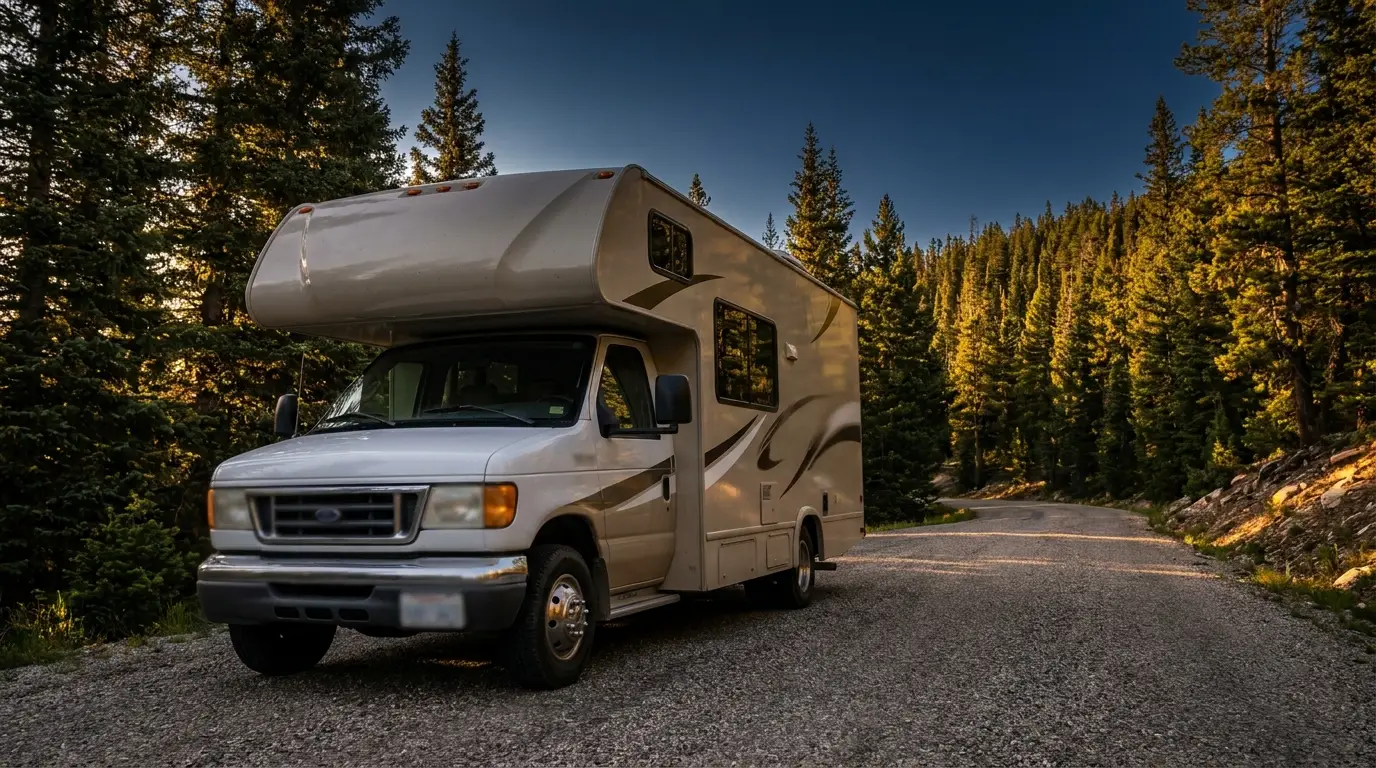
Absolutely. Class C motorhomes are built on a cutaway chassis — typically a Ford E-Series or E-450, Ram ProMaster, or Chevy platform — with a custom coach body constructed on top. The cutaway chassis and its drivetrain are covered under California's Song-Beverly Consumer Warranty Act as motor vehicle components. The coach body and habitation systems are covered under the manufacturer's express warranty and the federal Magnuson-Moss Warranty Act.
What makes Class C motorhomes unique is the cab-over section — the sleeping area that extends forward over the driver's cab. This structure creates a physical junction between the factory-built cab and the aftermarket coach body. That junction is a known engineering stress point and one of the most common sources of warranty disputes in the Class C segment.
Jeff Le Pere defended Class C manufacturers for over a decade. He knows how they structure warranty language to exclude cab-over defects, how they deflect chassis claims to Ford or Ram, and how they use the cutaway platform's multi-warranty structure to avoid accountability. He now uses that knowledge exclusively for California consumers.
What Class C Motorhome Defects Qualify for Lemon Law in California?
Motor Vehicle Component Defects
Ford E-Series and E-450 cutaway chassis defects — the dominant Class C platform
Ram ProMaster cutaway chassis issues — increasingly common in newer Class C builds
Transmission failures on Ford 6R80 and TorqShift automatic transmissions
Ford V10 (6.8L Triton) engine overheating — a persistent and well-documented issue
Brake system defects — undersized for the loaded weight of a fully equipped Class C
Steering wander and alignment defects caused by coach body weight distribution
Habitation Component Defects
Cab-over structural separation and water intrusion at the chassis-to-coach junction
Slide-out mechanism failures — Lippert and Schwintek systems
Roof delamination and membrane separation — accelerated by cab-over flexing
Generator failures — Onan units undersized for the electrical load
Electrical system failures — converter, inverter, and 12V distribution issues
HVAC defects — rooftop A/C failures and furnace malfunctions
To qualify, the following must generally be true:
Any chassis or drivetrain defect has required 2+ failed repair attempts (safety) or 4+ (non-safety)
Any habitation or cab-over defect has not been repaired after a reasonable number of attempts
Your Class C has spent 30+ cumulative days at a repair facility for warranty work
The chassis manufacturer and the coach builder are blaming each other for your defect
A component supplier defect is being used to deny the RV manufacturer's warranty obligation
The Cab-Over Problem — Why Class C Motorhomes Have Unique Lemon Law Challenges
Every Class C motorhome has a structural junction where the factory-built cab meets the aftermarket coach body. The cab-over sleeping area bridges this junction, extending forward over the driver's compartment and resting on the roof of the original truck cab. This design is what defines a Class C — and it is also the single most disputed failure point in Class C warranty claims.
The problem is physics. A cutaway chassis flexes when it travels over uneven road surfaces. The factory cab and the coach body are built by different manufacturers, from different materials, with different tolerances. The cab-over section sits directly over the point where these two structures meet. Over time, that junction flexes, separates, and allows water to penetrate. Once water enters, it damages the cab-over subfloor, degrades insulation, promotes mold growth, and compromises the structural integrity of the sleeping area above the driver.
Manufacturers exploit this ambiguity aggressively. Ford says the cab-over is not part of the chassis. The coach builder says the junction failure originates at the factory cab roof. The consumer is left with a leaking motorhome and two companies pointing at each other. Jeff Le Pere managed this exact deflection strategy from the manufacturer's side for over a decade. He knows where the warranty language creates gaps and how to close them. That is why cab-over claims are one of his most effective areas of practice.
Your Class C Was Built for the Open Road — Not the Repair Lane.
Jeff knows every tactic the manufacturer will use. He knows because he used them.
What Can You Recover on a Class C Motorhome Lemon Law Claim?
Class C motorhomes typically range from $80,000 to $180,000 — a major financial commitment for any family. A full repurchase returns that investment and puts you back in position to buy a motorhome that actually works.
Full Repurchase
The manufacturer buys back the motorhome and refunds:
Your original down payment — often $15,000 to $40,000 on a Class C purchase
Every monthly payment made since purchase
California registration and licensing fees
Sales tax paid at purchase
Documented incidental costs — towing, campground cancellations, rental vehicles, storage
Less a mileage offset based on miles driven before the first warranty repair attempt
Replacement Class C
A comparable Class C motorhome from the manufacturer, free of the defects that made your original unit a lemon.
Cash Settlement
A negotiated resolution that typically incorporates the repurchase components and is often resolved faster than a full buyback process. Attorney fees are paid by the manufacturer. You pay nothing regardless of outcome.
Illustrative Example
On a $120,000 Thor Four Winds purchased with $25,000 down, the full repurchase value before the mileage offset would include the down payment, all monthly payments made, taxes, fees, and documented incidental costs. This is illustrative only and does not represent a guaranteed recovery.
Class C Brands We Handle Lemon Law Cases For
Thor Motor Coach
Four Winds, Chateau, Quantum
Thor is the largest Class C manufacturer in North America. Their Four Winds and Chateau lines are built on Ford E-Series cutaway chassis platforms. California lemon law claims on Thor Class C units frequently involve cab-over water intrusion, Onan generator failures, and Ford V10 engine overheating under the weight of a fully loaded coach.
Coachmen RV
Leprechaun, Cross Trail, Freelander
Coachmen builds Class C motorhomes on both Ford and Chevy cutaway platforms. California lemon law issues with Coachmen products commonly involve slide-out mechanism failures, water intrusion through roof seams and the cab-over junction, and electrical system defects in the Leprechaun and Cross Trail lines.
Forest River
Sunseeker, Forester, Solera
Forest River offers Class C models across multiple chassis platforms including Ford, Chevy, and Mercedes Sprinter. California lemon law claims on Forest River Class C units frequently involve Lippert component failures, slide-out defects, and chassis-related issues that Forest River attributes to the chassis manufacturer rather than accepting warranty responsibility.
Winnebago
View, Navion, Vita
Winnebago's View and Navion are built on the Mercedes Sprinter chassis — a premium Class C segment with its own set of warranty complexities. California lemon law cases on Sprinter-based Winnebago Class C units involve both Mercedes-Benz Sprinter chassis defects and coach body failures, creating a two-manufacturer blame dynamic that Jeff Le Pere is particularly experienced in defeating.
Jayco
Redhawk, Melbourne, Greyhawk
Jayco Class C motorhomes are built primarily on Ford cutaway chassis platforms. California lemon law claims involving Jayco Class C units commonly involve cab-over separation and water intrusion, electrical system malfunctions, and Ford chassis defects that Jayco deflects to the chassis manufacturer.
Not Sure Whether Your Class C Qualifies?
Jeff reviews every Class C case personally. One conversation is all it takes.
Class C Motorhome Defects, Compared
See how Class C overlaps with Class A and B — and the chassis and water-intrusion issues that cut across all three.
Class C Motorhome Lemon Law FAQ
Answers to common questions about California Class C motorhome lemon law.
Your Family Deserves a Class C That Works.
Jeff Le Pere fights for Class C motorhome owners across all of California. Zero cost. Direct attorney access. Personal response guaranteed.