Truck Brake Defect Lemon Law Steps for California Owners
California’s Song-Beverly Consumer Warranty Act defines a lemon as any vehicle with a defect that substantially impairs its use, value, or safety and that the manufacturer cannot fix in a reasonable number of attempts. For truck owners dealing with brake failures, that definition carries real weight. Brake defects trigger a shorter repair attempt threshold than most other defects, which means your claim can move faster. Following the correct truck brake defect lemon law steps gives you the legal standing to demand a full refund, a replacement truck, or a cash settlement, and potentially a civil penalty of up to two times your actual damages if the manufacturer willfully ignored its warranty obligations.
What qualifies a truck brake defect for California lemon law?
A brake defect qualifies under California lemon law when it constitutes a “nonconformity” to the manufacturer’s warranty and substantially impairs the truck’s safety. The Song-Beverly Act classifies brakes as a safety-of-life system. That classification matters because it cuts the repair attempt requirement in half.
Under the standard lemon law presumption, a vehicle is presumed a lemon after four failed repair attempts for a non-safety defect within the first 18 months or 18,000 miles of ownership. Brakes, steering, and airbags follow a different rule. Two failed repair attempts for a brake defect within that same 18-month or 18,000-mile window trigger the lemon presumption. That is a critical distinction most truck owners do not know.
The defect must also be covered by the manufacturer’s written warranty, not caused by owner abuse or unauthorized modifications. The lemon law presumption window runs from the original delivery date, not from when the defect first appeared. Days your truck spent out of service for repairs count toward your claim, and tracking them strengthens your position.
Qualifying brake defects include:
- Brake pedal fade or complete failure under normal driving conditions
- Anti-lock braking system (ABS) malfunction that prevents controlled stops
- Brake fluid leaks that recur after repair
- Grinding, pulling, or pulsation that persists after two documented repair visits
- Warning lights for brake system faults that return after dealer service
Pro Tip: Review the full California qualifying defects list before your first dealer visit so you know exactly how to describe your brake complaint in writing.
How to document brake defect repair attempts properly
Documentation is the foundation of every successful lemon law claim. Verbal complaints without matching Repair Order notes do not count as repair attempts under California law. If the Repair Order does not state “brake failure,” “brake pedal sinks to floor,” or the specific symptom you reported, that visit may not count toward your threshold.
Follow these steps every time you bring your truck in for a brake complaint:
- Write your complaint before you arrive. Draft a clear, specific description of the brake problem, including when it happens, how often, and any warning lights or sounds. Hand this written description to the service advisor and ask them to copy it verbatim onto the Repair Order.
- Read the Repair Order before you sign. Confirm that your exact complaint appears in the “Customer States” section. If it does not, ask the advisor to correct it before you leave the truck.
- Photograph the Repair Order at drop-off and pick-up. Photographing repair orders immediately upon pick-up creates timestamped proof of what was reported and what the dealer claimed to fix. This evidence is difficult to dispute later.
- Keep every copy. Store physical and digital copies of every Repair Order in a dedicated folder. Courts and manufacturers both scrutinize this paper trail.
- Send the statutory written notice to the manufacturer. Under Civil Code §1793.2(d)(2), you must send written notice to the manufacturer, not just the dealer, demanding a final repair opportunity or a buyback. This notice is a legal prerequisite. Skipping it gives the manufacturer grounds to dismiss your claim.
Your written notice to the manufacturer should include your name and contact information, the vehicle identification number (VIN), a summary of every repair attempt with dates and Repair Order numbers, a clear statement that the defect remains unresolved, and a specific demand for a repurchase or replacement.
Pro Tip: Send the manufacturer notice by certified mail with return receipt requested. Keep the tracking confirmation and the signed delivery receipt. These documents prove the manufacturer received your demand and start the clock on their legal obligation to respond.

What steps should you take once the lemon presumption applies?
Once your truck brake defect meets the two-attempt threshold within 18 months or 18,000 miles, the lemon presumption under Song-Beverly shifts the burden to the manufacturer. They must prove the defect does not substantially impair safety or that it resulted from your misuse. Here is the procedural roadmap from that point forward.
- Compile all repair records. Gather every Repair Order, dealer invoice, and service record related to the brake defect. Organize them chronologically and note the total days your truck was out of service.
- Send the formal written demand notice. If you have not already sent the Civil Code §1793.2(d)(2) notice, do it now. The manufacturer gets one final repair opportunity after receiving this notice before you can proceed with a buyback demand.
- Consult a California lemon law attorney before accepting any offer. Engaging an attorney early improves your negotiation position significantly. Manufacturers know that safety defect cases carry civil penalty exposure, and they respond differently when an attorney is involved.
- Understand your recovery options. A successful claim entitles you to one of three outcomes under Song-Beverly.
A full repurchase means the manufacturer refunds your down payment, all monthly payments made, taxes, registration fees, finance charges, and incidental costs like rental cars or towing. A replacement vehicle must be comparable to your original truck. A civil penalty of up to two times your actual damages applies when the manufacturer willfully failed to honor its warranty obligations. You choose which remedy to pursue.
- Account for AB 1755 procedural requirements. Under AB 1755, which took effect for claims filed after its enactment, truck owners must send a 30-day pre-suit written notice before filing a lawsuit. Manufacturers who opt in under SB 26 trigger a mandatory mediation process that must be completed within 150 days after the manufacturer answers the complaint. These procedural changes affect how quickly your claim moves and what deadlines you must meet. Missing the AB 1755 notice window can delay or derail your case.
The statute of limitations for California lemon law claims is also affected by AB 1755. Truck owners must file within one year of the warranty’s expiration date. That deadline is firm.
What common mistakes undermine truck brake lemon law claims?
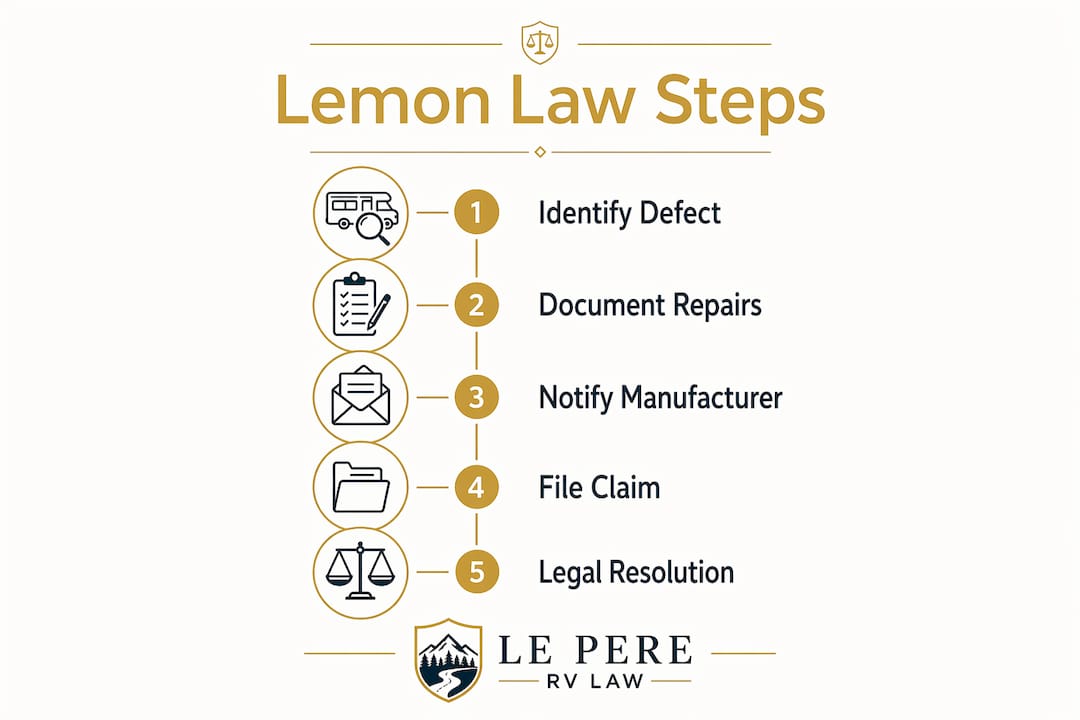
Most lemon law claims for brake defects fail not because the defect was minor, but because of avoidable procedural errors. Failure to properly notify the manufacturer in writing and incomplete repair order documentation are the top two reasons claims collapse before litigation.
The most common mistakes truck owners make:
- Relying on verbal complaints. Telling the service advisor about your brake problem is not enough. Only written complaints captured on the Repair Order count as documented repair attempts.
- Assuming four attempts are required. Most owners mistakenly assume they need four repair attempts for any defect. For brake defects, the threshold is two. Waiting for a fourth attempt wastes time and weakens your claim.
- Skipping the manufacturer notice. Many truck owners send demand letters only to the dealership. The law requires notice to the manufacturer directly. Dealer notice does not satisfy Civil Code §1793.2(d)(2).
- Failing to track days out of service. Every day your truck sits at the dealership for a covered repair counts toward your claim. Owners who do not track these days lose a measurable part of their damages calculation.
- Missing the AB 1755 filing deadline. California AB 1755 requires truck owners to file within one year of warranty expiration. Waiting too long eliminates your right to pursue a claim entirely.
Pro Tip: Create a simple spreadsheet the day you first notice a brake problem. Log every dealer visit, the date you dropped off the truck, the date you picked it up, and the Repair Order number. This record takes five minutes to maintain and can be worth thousands of dollars in your claim.
The lemon law claims process rewards preparation. Truck owners who document carefully, send proper notices, and consult an attorney early consistently reach resolution faster than those who wait.
Key Takeaways
California truck owners with brake defects can qualify for a lemon law buyback, replacement, or civil penalty after just two failed repair attempts within 18 months or 18,000 miles under the Song-Beverly Consumer Warranty Act.
| Point | Details |
|---|---|
| Two-attempt brake threshold | Brake defects require only 2 failed repair attempts within 18 months or 18,000 miles to trigger the lemon presumption. |
| Written Repair Orders are mandatory | Verbal complaints do not count; your exact brake complaint must appear in writing on every Repair Order. |
| Manufacturer notice is a legal prerequisite | Send a Civil Code §1793.2(d)(2) written demand to the manufacturer by certified mail before filing any claim. |
| AB 1755 deadline is firm | California truck owners must file their lemon law claim within one year of the warranty’s expiration date. |
| Recovery includes civil penalties | Willful warranty violations entitle you to up to two times your actual damages on top of a full refund or replacement. |
What 25 years of brake defect cases taught me
I spent 11 years defending manufacturers and dealerships before I switched sides. That experience gave me a clear view of exactly how manufacturers evaluate brake defect claims and where they look for weaknesses.
The first thing a manufacturer’s defense team does is pull every Repair Order and look for gaps. If your complaint says “noise when braking” on visit one and “brake pedal soft” on visit two, they argue those are two different defects and try to reset the repair attempt count. I have seen this tactic used repeatedly. The fix is simple: use the same specific language on every Repair Order so the repair history reads as one continuous, unresolved problem.
Brake defect cases are genuinely the strongest category of lemon law claims. Manufacturers prioritize safety defect cases because civil penalty exposure is real and the documentation requirements are straightforward. A well-documented brake claim with two Repair Orders and a proper manufacturer notice is a case manufacturers want to settle quickly. They know a jury takes brake failures seriously.
The AB 1755 procedural changes have added steps, but they have also created structure that benefits prepared claimants. The mandatory mediation window gives both sides a defined timeline to resolve the dispute without full litigation. Truck owners who understand these rules and follow them precisely put themselves in the strongest possible position.
My advice is to consult a California lemon law attorney after the second failed brake repair, not after the fourth. Waiting costs you time, and under AB 1755, time is the one resource you cannot recover.
— Jeff Le Pere
How The Law Offices of Jeffrey Le Pere handles truck brake defect claims
Truck owners in California dealing with persistent brake defects have legal rights that most manufacturers count on them not knowing. The Law Offices of Jeffrey Le Pere represents truck owners statewide in California auto lemon law claims, including brake defect cases for cars, trucks, and SUVs.

Every case runs on contingency, meaning you pay nothing regardless of outcome. The firm’s background includes 11 years defending manufacturers, which means Jeff Le Pere knows how the other side builds its case and where it looks for weaknesses in yours. The Law Offices of Jeffrey Le Pere stays current on AB 1755 and SB 26 procedural requirements so your claim meets every deadline. Contact the firm at rvautolegalteam.com for a free case review and find out what your truck brake defect claim is worth.
FAQ
How many repair attempts does a truck brake defect require in California?
California lemon law requires only two failed repair attempts for brake defects within the first 18 months or 18,000 miles. Brakes are classified as a safety-of-life system, which cuts the standard four-attempt threshold in half.
What does a successful lemon law claim pay out for a truck?
A successful claim under the Song-Beverly Act entitles you to a full repurchase covering your down payment, monthly payments, taxes, fees, and incidental costs, or a comparable replacement vehicle. The manufacturer may also owe a civil penalty of up to two times your actual damages if the violation was willful.
Do I need to notify the manufacturer directly before filing a lemon law claim?
Yes. Civil Code §1793.2(d)(2) requires written notice sent directly to the manufacturer, not just the dealership. Skipping this step gives the manufacturer grounds to reject your claim before it reaches litigation.
How does AB 1755 affect my truck lemon law claim timeline?
AB 1755 requires a 30-day pre-suit written notice before you can file a lawsuit. Manufacturers who opt in under SB 26 trigger mandatory mediation within 150 days of answering the complaint. The law also sets a one-year filing deadline from the warranty’s expiration date.
What if the dealer fixed the brakes but the problem came back?
A repair that fails to resolve the defect permanently still counts as a repair attempt. If your brake problem returns after the dealer’s fix, document the recurrence in writing on your next Repair Order and request a new service visit immediately.