Toyota Tundra Defect Lemon Law Basics for California Owners
California’s lemon law entitles Toyota Tundra owners to a buyback, replacement, or monetary damages when their truck suffers a substantial defect that persists after a reasonable number of repair attempts. The governing statute is the Song-Beverly Consumer Warranty Act, codified at California Civil Code §§ 1790–1795.8. Under that law, the manufacturer pays your attorney fees if you prevail, which means you can hire qualified legal representation at no out-of-pocket cost. Understanding the tundra defect lemon law basics covered here puts you in a position to act before critical deadlines close your window. California AB 1755 now shortens that window, requiring owners to file within one year of the warranty’s expiration date.
What defects in a Toyota Tundra qualify under California lemon law?
A qualifying defect is one that substantially impairs use, value, or safety under the Song-Beverly Act. That three-part test is the central legal standard, and it matters because not every mechanical problem clears the bar.
Defects that routinely qualify include:
- Transmission failures: Repeated slipping, shuddering, or failure to engage gears that persist after multiple repair visits.
- Engine problems: Stalling, loss of power, or oil consumption defects. Recent Toyota Tundra engine defect patterns on 2022–2024 models include connecting rod bearing failures and turbocharger issues on the twin-turbocharged V6.
- Brake system defects: Brake fade, premature wear, or loss of braking response that creates a safety risk.
- Electrical and software defects: Malfunctions in the pre-collision system, lane departure warning, or infotainment that affect safe operation.
Safety-related defects require fewer repair attempts to qualify. The heightened risk standard means two documented repair attempts for a safety defect can be enough to trigger the lemon law presumption.
Defects that generally do not qualify include cosmetic flaws such as paint chips or trim misalignment, normal wear on brakes or tires, and damage caused by owner neglect or accidents. The distinction matters because manufacturers routinely argue that a defect falls into one of these excluded categories.
Pro Tip: Every time you bring your Tundra in for a repair, ask the service advisor to write the specific complaint on the repair order using your exact words. Vague entries like “customer states noise” are harder to use than “transmission shudder at highway speeds.”
How does the lemon law claim process work for a defective Toyota Tundra?
The lemon law claim process follows a defined sequence of repair attempts, statutory thresholds, and procedural notices. Getting the sequence right protects your rights.
The repair attempt thresholds
California law presumes a vehicle is a lemon if, within 18 months or 18,000 miles of delivery, any of the following occur:
- Four or more repair attempts for the same defect.
- Two or more repair attempts for a defect that could cause death or serious injury.
- Thirty or more cumulative days out of service for warranty repairs.
Each threshold creates a legal presumption in your favor. That presumption shifts the burden to the manufacturer to prove the vehicle is not a lemon. Repair attempts need not be successful. Any documented attempt to diagnose or repair the defect counts, including visits where the dealer wrote “could not duplicate.”
AB 1755 procedural requirements
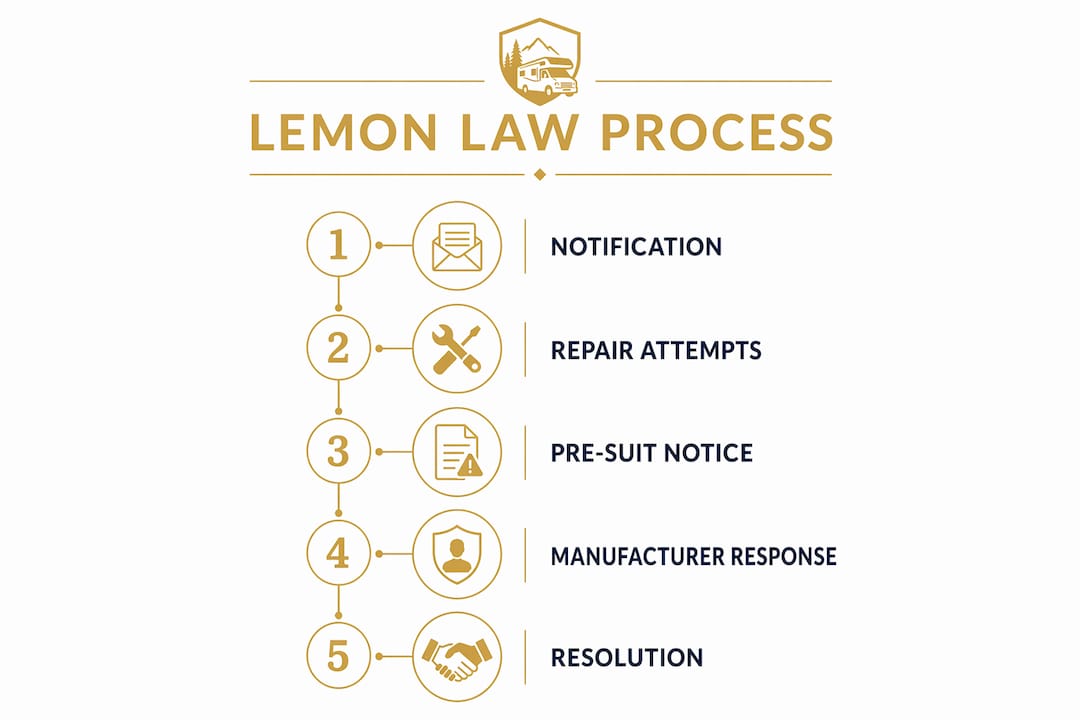
AB 1755 changed the procedural rules for manufacturers that opt into its framework. Owners dealing with an opted-in manufacturer must send a formal pre-suit notice at least 30 days before filing suit. After filing, mandatory mediation must occur within 150 days.
| Procedural step | Opted-in manufacturer | Non-opted-in manufacturer |
|---|---|---|
| Pre-suit notice required | Yes, 30 days before filing | No |
| Mandatory mediation | Yes, within 150 days of filing | No |
| Filing deadline | Within 1 year of warranty expiration | Standard statute of limitations |
| Substantive rights | Unchanged | Unchanged |
AB 1755 does not apply to every manufacturer. You need to confirm whether Toyota has opted into the framework before you send any notice, because a misstep in that process can delay your claim.
Pro Tip: Send your pre-suit notice by certified mail with return receipt requested. That creates a timestamped record that satisfies the notice requirement and prevents the manufacturer from claiming it never arrived.
What remedies are available if your Toyota Tundra qualifies?
The Song-Beverly Act gives you three core remedies: a buyback, a replacement vehicle, or a cash settlement. Each carries real financial weight.
Buyback calculation
A buyback refunds the full purchase price minus a mileage offset. The statutory buyback formula covers:
- Down payment and all monthly payments made.
- Outstanding loan balance.
- Sales tax and registration fees.
- Incidental costs such as towing, rental car expenses, and repair-related costs.
The mileage offset reduces the refund based on miles driven before the first repair attempt, calculated using a statutory formula tied to the vehicle’s purchase price. The offset rewards owners who bring the truck in early, because fewer miles driven before the first complaint means a smaller deduction.
Replacement vehicle
You can elect a replacement instead of a buyback. The manufacturer must provide a substantially identical vehicle with a new warranty. Most owners choose the buyback because it eliminates the risk of receiving another truck with the same underlying defects.
Civil penalties and attorney fees
When a manufacturer willfully ignores its warranty obligations, the civil penalty provision allows a court to award up to twice your actual damages on top of the buyback amount. That penalty is not automatic. You need evidence that the manufacturer knew about the defect and chose not to fix it. Attorney fees are shifted to the manufacturer under California Civil Code §1794(d) when you prevail, which is why contingency representation is standard practice in these cases.
What unique considerations apply to Toyota Tundra claims in California in 2026?
Several factors specific to 2026 affect how Tundra owners should approach their claims.
The AB 1755 opt-in framework is the most significant procedural change. Owners who skip the pre-suit notice requirement for an opted-in manufacturer risk losing procedural rights, even if their underlying claim is strong. Confirm Toyota’s current opt-in status before taking any formal step.
Documentation is the single most controllable factor in your claim. Owners who keep organized records of every repair order, every communication with the dealership, and every day the truck was out of service build stronger cases. Gaps in documentation give manufacturers room to dispute the repair count.
The presumption window is a shortcut, not a hard requirement. Cases can succeed outside the 18-month or 18,000-mile window when the owner has sufficient evidence of persistent defects and repeated repair failures. Do not assume your claim is dead because you passed the window.
Common mistakes Tundra owners make include:
- Waiting too long to consult an attorney, which compresses the time available before the AB 1755 filing deadline.
- Accepting a dealer’s verbal assurance that the problem is fixed without getting a written repair order.
- Trading in or selling the vehicle before the claim is resolved, which can eliminate the remedy.
- Assuming the recall remedy resolves the lemon law claim. A recall does not waive your rights under the Song-Beverly Act.
The Song-Beverly Act also covers used Tundras that are still under the original manufacturer’s express warranty. If you bought a certified pre-owned 2022 or 2023 Tundra and the factory warranty is still active, you may have a valid claim.
Pro Tip: Request a complete service history from the dealership in writing. Dealers are required to maintain repair records, and that history can reveal prior repair attempts you may have forgotten or that occurred under a previous owner.
Key Takeaways
California’s Song-Beverly Consumer Warranty Act gives Toyota Tundra owners the right to a buyback, replacement, or civil penalties when a substantial defect persists after a reasonable number of repair attempts, with attorney fees paid by the manufacturer if you prevail.
| Point | Details |
|---|---|
| Qualifying defect standard | Defects must substantially impair use, value, or safety to qualify under the Song-Beverly Act. |
| Repair attempt thresholds | Four attempts for the same defect, two for safety defects, or 30 days out of service triggers the lemon presumption. |
| AB 1755 notice requirement | Opted-in manufacturers require a 30-day pre-suit notice before you can file suit. |
| Buyback calculation | Refund covers payments, taxes, and incidental costs minus a statutory mileage offset. |
| Civil penalty available | Willful manufacturer violations can result in a penalty of up to twice actual damages. |
What I’ve learned defending manufacturers that Tundra owners need to know
I spent 11 years on the other side of these cases, building the defense for manufacturers and dealerships. That experience taught me exactly where owners lose claims they should win, and it almost always comes down to documentation and timing.
Manufacturers look for gaps. If your repair orders are vague, if you have a two-year stretch with no documented complaints, or if you traded the truck in before filing, the defense team will use every one of those gaps. I know because I used them. The owners who come to me with organized records, every repair order in sequence, and a clear timeline of when the defect started are the ones who put the manufacturer in the hardest position.
The other thing I see constantly is owners waiting. They wait because they think the dealer will fix it on the next visit. They wait because they don’t want the hassle. By the time they call me, AB 1755 has compressed their filing window and the pre-suit notice clock is already running. The law gives you real leverage, but only if you use it before the deadlines close.
One more thing: do not assume a Technical Service Bulletin or a recall means Toyota has already admitted liability and your case is easy. TSBs and recalls are actually useful evidence, but they do not substitute for the legal process. A manufacturer that issued a TSB for your exact complaint and still failed to fix your truck after multiple attempts has a harder time arguing the defect was unknown or unforeseeable. That is the kind of detail that turns a standard buyback into a civil penalty case.
— Jeff Le Pere
How The Law Offices of Jeffrey Le Pere can help with your Tundra claim
Toyota Tundra owners in California dealing with recurring defects have real legal options, and the process is more accessible than most people expect.
The Law Offices of Jeffrey Le Pere handles California auto lemon law claims for Tundra owners on a full contingency basis. You pay nothing. If the case resolves in your favor, the manufacturer covers attorney fees under the Song-Beverly Act. The firm prepares and sends pre-suit notices, manages the AB 1755 mediation process, and takes cases through litigation when manufacturers refuse to honor their obligations. Jeff Le Pere’s 11 years defending manufacturers means he knows how Toyota builds its case, and he uses that knowledge to build yours. Contact The Law Offices of Jeffrey Le Pere for a free case review.
FAQ
What is lemon law in California?
California’s lemon law is the Song-Beverly Consumer Warranty Act, which requires manufacturers to repurchase or replace a vehicle that has a substantial defect not fixed after a reasonable number of repair attempts. Attorney fees are paid by the manufacturer when the consumer prevails.
How many repair attempts does a Toyota Tundra need to qualify?
The lemon law presumption applies after four repair attempts for the same defect, two attempts for a safety-related defect, or 30 cumulative days out of service, all within 18 months or 18,000 miles of delivery.
Does AB 1755 affect my Toyota Tundra lemon law claim?
AB 1755 requires owners dealing with an opted-in manufacturer to send a formal pre-suit notice at least 30 days before filing suit and to participate in mandatory mediation within 150 days of filing. Substantive rights under the Song-Beverly Act remain unchanged.
Can I file a lemon law claim on a used Toyota Tundra?
Yes. The Song-Beverly Act covers used vehicles that are still under the original manufacturer’s express warranty, including certified pre-owned Tundras with an active factory warranty.
What does a Toyota Tundra lemon law buyback include?
A buyback covers your down payment, all monthly payments, the outstanding loan balance, sales tax, registration fees, and incidental costs such as towing and rental car expenses, minus a statutory mileage offset calculated from the miles driven before the first repair attempt.