RV Lemon Law Claim Benefits for California Owners
California RV lemon law claim benefits include a full vehicle buyback, a replacement RV, reimbursement for out-of-pocket costs, civil penalties, and attorney fees, all guaranteed under the Song-Beverly Consumer Warranty Act. The law applies to motorhomes, fifth wheels, and travel trailers purchased for personal use and covered under a manufacturer’s warranty. If your RV has a defect that substantially impairs its use, safety, or value, and the manufacturer cannot fix it after a reasonable number of attempts, you have the right to act. California AB 1755 tightens that window further, requiring owners to file within one year of the warranty’s expiration date.
1. What are the primary compensation remedies under California RV lemon law?
The Song-Beverly Consumer Warranty Act gives you two primary remedies: a full repurchase or a replacement RV. A full buyback covers your purchase price, sales tax, registration fees, and finance charges. That means you walk away whole, not just partially reimbursed.

The repurchase calculation for motorhomes includes a mileage offset. The manufacturer deducts a proportional amount based on miles driven at the time of the first repair attempt related to the defect, using a specific Song-Beverly formula. Towable RVs such as fifth wheels and travel trailers do not receive a mileage offset, which makes their buyback calculations more straightforward.
Key remedies available under a California RV lemon law claim:
- Full repurchase: Purchase price, taxes, registration fees, and finance charges refunded
- Replacement RV: A comparable new vehicle substituted for the defective one
- Mileage offset: Applied to motorhomes only, calculated from the first qualifying repair attempt
- Incidental damages: Lodging, towing, storage, and other costs caused by the defect
- Civil penalties: Up to twice the actual damages for willful manufacturer violations
- Attorney fees and costs: Paid separately by the manufacturer, not deducted from your recovery
2. How does RV manufacturing complexity affect your lemon law claim?
RV lemon law claims are more complex than car claims because a single RV involves multiple manufacturers, each covering different systems under separate warranties. The chassis manufacturer covers the engine, drivetrain, and brakes. The coach manufacturer covers slide-outs, plumbing, electrical systems, and the living space. Component manufacturers handle individual parts like refrigerators, generators, and air conditioning units.
This structure means a single defective RV can trigger claims against two or three separate manufacturers simultaneously. Each manufacturer may dispute responsibility, pointing to another party’s system as the source of the problem. That finger-pointing delays repairs and complicates your claim if you are not prepared for it.
How multi-manufacturer complexity affects your claim:
- Defect type determines liability: An engine failure points to the chassis maker; a leaking roof points to the coach maker
- Separate warranties apply: Each manufacturer sets its own warranty terms and repair procedures
- Parallel claims may be necessary: Owners often must pursue coordinated legal action against multiple parties to recover full compensation
- Documentation must be system-specific: Service records need to identify which manufacturer’s system failed and which dealer performed the repair
- Notification requirements multiply: Written notice may need to go to each manufacturer separately to preserve your rights
Pro Tip: Before your first repair appointment, identify whether the defect falls under the chassis warranty or the coach warranty. Send written notice to the correct manufacturer immediately. Sending notice to only one manufacturer when two are involved can weaken your claim.
3. What documentation and evidence maximize your lemon law claim benefits?
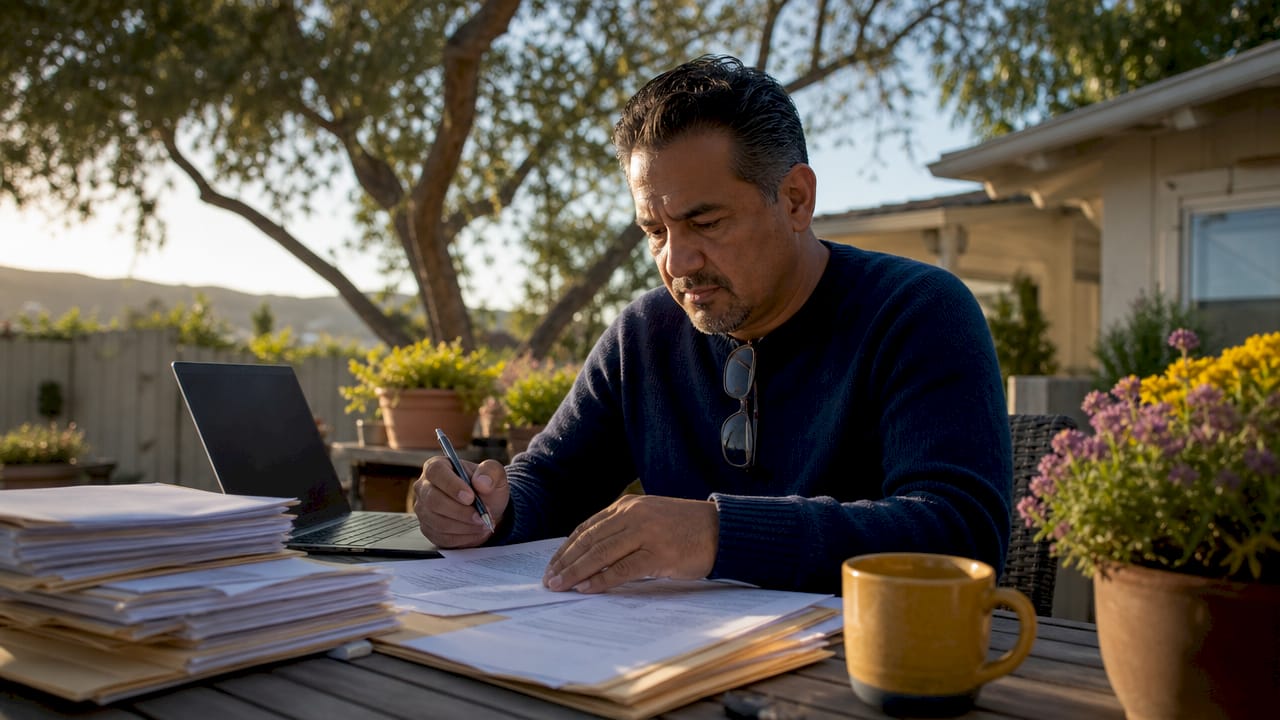
Meticulous documentation is the single most important factor in a successful RV lemon law claim. Every repair order must accurately reflect your complaint, the symptoms you described, the work performed, and the outcome. Treat each service record as a potential court exhibit from the moment you hand your RV to the dealer.
Owners should track cumulative days out of service, including time spent waiting for parts. California § 1793.22 treats 30 or more cumulative days out of service as a threshold that supports a reasonable number of repair attempts. Reaching that threshold strengthens your claim significantly.
Steps to build a strong documentation record:
- Record every defect immediately. Write down the date, the symptom, and how it affects your use of the RV before you contact the dealer.
- Review every repair order before you sign. Confirm that your exact complaint is written on the order, not a vague summary that understates the problem.
- Log all days out of service. Include drop-off dates, pick-up dates, and any delays caused by parts availability.
- Keep all written communications. Save every email, letter, and text message exchanged with the dealer or manufacturer.
- Notify manufacturers in writing while the warranty is active. Early written notice to all relevant manufacturers speeds their response and increases the likelihood of a favorable settlement.
- Photograph and video every defect. Visual evidence supports your written records and is difficult for manufacturers to dispute.
Pro Tip: Organize your defect records by system type: electrical, plumbing, structural, mechanical. A pattern of failures across one system tells a far more compelling story than a scattered list of unrelated complaints.
4. What incidental damages can RV owners recover beyond a refund or replacement?
California lemon law allows owners to recover incidental damages that result directly from the defect and the repair downtime. These costs go beyond the vehicle itself and can add meaningful value to your total recovery.
If your RV serves as your primary residence and a defect forces you into a hotel or rental, those lodging costs are reimbursable. Towing fees, storage fees during extended repair periods, and lost campsite reservation fees all qualify as incidental damages under California law. The key requirement is that each expense must connect directly to the defect or the repair process.
Incidental damages typically accepted under California RV lemon law claims:
- Alternate lodging: Hotel or rental costs when the RV is your primary home and is out of service
- Towing fees: Charges to transport the RV to and from the repair facility
- Storage fees: Costs incurred when the RV sits at a dealer or storage lot during extended repairs
- Lost campsite fees: Non-refundable reservation fees forfeited because the RV was unavailable
- Rental vehicle costs: Transportation expenses caused by the RV’s unavailability in some circumstances
Document every expense with receipts and a written explanation connecting each cost to the specific defect. Vague expense logs rarely survive manufacturer scrutiny.
5. How do civil penalties and attorney fees increase your total recovery?
Civil penalties under the Song-Beverly Act can reach up to twice the actual damages when a manufacturer willfully violates its warranty obligations. A willful violation means the manufacturer knew about the defect and failed to honor its legal duty to repair or repurchase. That penalty provision is not symbolic. It doubles the financial consequence for manufacturers who stall or deny valid claims.
Attorney fees work differently from most legal cases. The manufacturer pays your attorney fees and court costs separately, on top of your recovery. That fee does not come out of your refund or replacement value. This structure makes legal representation accessible regardless of your financial situation.
The civil penalty provision exists because the legislature recognized that manufacturers have every financial incentive to delay and deny claims. Doubling the damages for willful violations removes that incentive. When a manufacturer knows that bad-faith conduct costs twice as much, compliance becomes the rational choice.
How these provisions benefit you in practice:
- No out-of-pocket legal costs: Attorney fees are covered by the manufacturer if you prevail
- Contingency representation: Firms like The Law Offices of Jeffrey Le Pere take RV lemon law cases on contingency, meaning you pay nothing regardless of outcome
- Penalty leverage: The threat of doubled damages gives experienced attorneys real negotiating power before trial
- Manufacturer accountability: These provisions push manufacturers toward early, fair settlements rather than prolonged disputes
Key takeaways
California RV lemon law claims deliver the strongest outcomes when owners document every defect by system, notify all relevant manufacturers in writing, and engage experienced legal counsel before the AB 1755 deadline expires.
| Point | Details |
|---|---|
| Primary remedies | Owners can receive a full repurchase or a replacement RV under the Song-Beverly Act. |
| Mileage offset applies to motorhomes | Towable RVs receive no mileage deduction, making their buyback calculations more favorable. |
| Multi-manufacturer complexity | Claims often require coordinated action against chassis, coach, and component manufacturers separately. |
| Incidental damages are recoverable | Lodging, towing, storage, and lost campsite fees qualify when directly tied to the defect. |
| Civil penalties double the stakes | Willful manufacturer violations can trigger penalties up to twice actual damages, paid on top of your recovery. |
What I have learned after 25 years of RV lemon law cases
The biggest mistake I see California RV owners make is waiting too long to get organized. They bring me a box of repair orders with no dates on the complaints, no record of who they called, and no written notice ever sent to the manufacturer. By that point, we are rebuilding a case from memory instead of evidence.
The second mistake is assuming the dealer handles manufacturer notification for you. The dealer works for the manufacturer, not for you. Written notice to the chassis maker and the coach maker is your responsibility, and it needs to go out while the warranty is still active. I have seen strong claims lose leverage simply because the owner assumed someone else sent that letter.
The defense side of my career taught me exactly how manufacturers evaluate claims. They look for gaps in the service record, vague complaint descriptions, and missing notification letters. Those gaps become their arguments. When your documentation is tight and your notice is timely, those arguments disappear. That is when manufacturers settle quickly, because they know a well-documented claim is a losing fight for them.
AB 1755 makes the timing issue more urgent than ever. You now have one year from the warranty’s expiration date to file. That deadline arrives faster than most owners expect, especially when they spend months trying to resolve the problem through the dealer alone.
— Jeff Le Pere
How The Law Offices of Jeffrey Le Pere can help you recover
California RV owners with persistent defects have legal rights that most manufacturers count on them not using. The Law Offices of Jeffrey Le Pere represents motorhome, fifth wheel, and travel trailer owners statewide under the Song-Beverly Act, handling the full claim from documentation review through settlement or trial.
Every case runs on contingency. The manufacturer covers attorney fees and costs, so you pay nothing out of pocket regardless of outcome. Jeff Le Pere spent 11 years defending manufacturers before switching to the consumer side, which means he knows exactly how manufacturers build their defense and how to counter it. If you are in the Sacramento area, a free case review is available now. For owners across California, visit rvautolegalteam.com to get started before the AB 1755 deadline closes your window.
FAQ
What qualifies an RV as a lemon under California law?
An RV qualifies as a lemon under the Song-Beverly Consumer Warranty Act when a manufacturer cannot fix a substantial defect after a reasonable number of repair attempts, or when the RV is out of service for 30 or more cumulative days during the warranty period.
Does California lemon law cover travel trailers and fifth wheels?
California lemon law covers travel trailers and fifth wheels purchased for personal use and covered under a manufacturer’s warranty. These towable RVs also benefit from no mileage offset in buyback calculations, unlike motorhomes.
How does AB 1755 affect my RV lemon law claim deadline?
AB 1755 requires California RV owners to file a lemon law claim within one year of the warranty’s expiration date. Missing that deadline can bar your claim entirely, regardless of how strong your documentation is.
Can I recover attorney fees in a California RV lemon law case?
Attorney fees and court costs are paid by the manufacturer separately from your recovery under the Song-Beverly Act. You do not pay legal fees out of your refund or replacement value.
What is the difference between a lemon law refund and a replacement?
A refund returns your full purchase price, taxes, registration fees, and finance charges, minus a mileage offset for motorhomes. A replacement provides a comparable new RV. Both are valid remedies under California law, and your attorney can advise which option delivers the greater financial benefit in your specific case.