Repair Attempt Evidence That Wins a Lemon Law Case

Repair attempt evidence is the foundation of every successful California lemon law claim under the Song-Beverly Consumer Warranty Act. Without organized, complete documentation of each service visit, even a vehicle with a serious recurring defect can fail to qualify for a refund, replacement, or cash settlement. California Civil Code § 1793.22 sets specific thresholds: four or more repair attempts for the same defect, two or more attempts for a safety-critical defect, or 30 or more cumulative days out of service within 18 months or 18,000 miles. The Law Offices of Jeffrey Le Pere helps California RV and vehicle owners build exactly this kind of evidence from day one.
What counts as repair attempt evidence in a lemon law case?
Repair orders are the single most important document for proving repeated repair attempts. A repair order, often called an RO, is the written record a dealership generates for every service visit. It captures the customer’s complaint, the technician’s diagnosis, parts replaced, labor performed, dates in and out, mileage, warranty status, and the technician’s name. Every one of those fields matters in a legal proceeding.
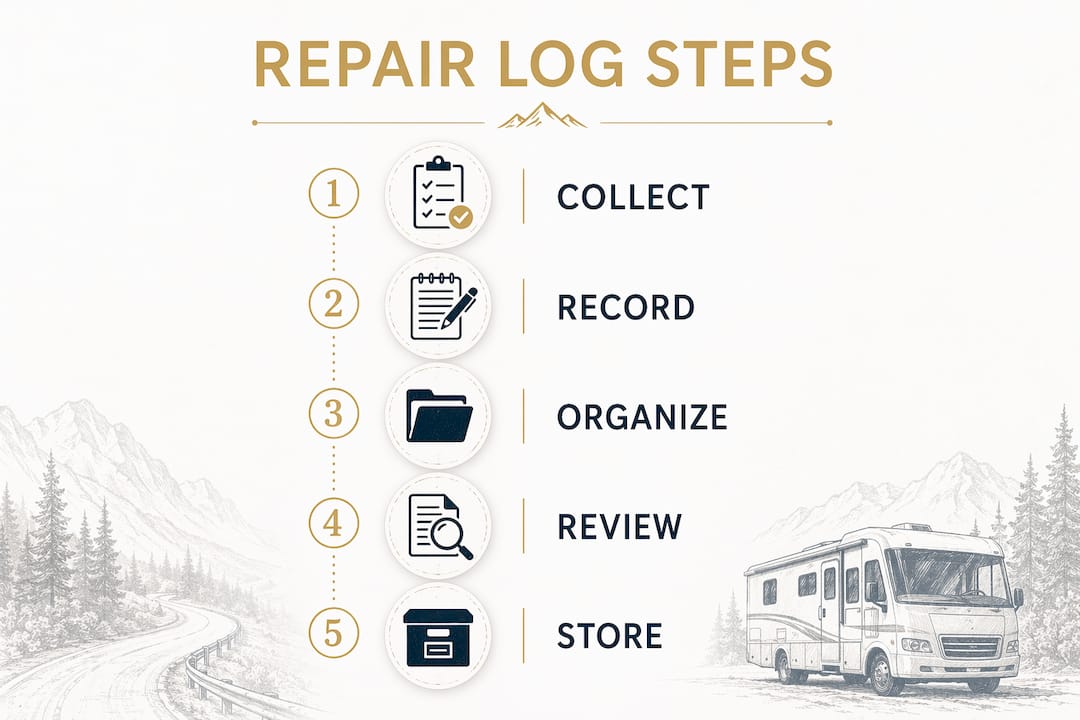
Collect a copy of the repair order before you leave the dealership every single time. Do not wait until you decide to file a claim. Dealers are required to provide these documents, and gaps in your repair history are one of the most common reasons claims stall.
Beyond repair orders, you need to gather:
- Service invoices and work authorizations: These confirm the scope of work authorized and any out-of-pocket costs you paid, which may count as incidental damages.
- Warranty claim records: Ask the service advisor for a copy of the warranty claim submitted to the manufacturer. This shows what the manufacturer was told and when.
- Written communications: Save every email, text message, and letter between you and the dealer or manufacturer. These establish timelines and show the manufacturer was aware of the defect.
- Photos and video: Record the defect in action whenever possible. A video of a slide-out that fails to retract or an engine warning light that stays on is far harder to dispute than a verbal description.
- Loaner and rental records: If the dealer provided a loaner vehicle or you rented one, keep those receipts. They confirm the vehicle was out of your possession and support your cumulative days out of service count.
Pro Tip: Ask the service advisor to write your exact words on the repair order under “customer complaint.” Vague entries like “noise” or “electrical issue” are weaker than “engine knocking at idle below 2,000 RPM.” Specificity protects you.
How do you build a repair attempt log for lemon law claims?
A master repair log compresses your entire service history into a format that an attorney can evaluate in minutes. Build it as a spreadsheet and update it after every visit. The log is your single source of truth when your case goes to attorney intake or legal proceedings.

Your log should include these columns for every visit:
| Column | What to record |
|---|---|
| Date in / Date out | Exact calendar dates the vehicle was dropped off and picked up |
| Days out of service | Total days the vehicle was unavailable to you during that visit |
| Mileage at drop-off | Odometer reading when you delivered the vehicle |
| Reported symptom | Your exact complaint in plain language |
| Dealer diagnosis | What the technician found, including “no problem found” results |
| Parts replaced | Part names and numbers if listed on the RO |
| Repair order number | The RO number printed on the dealership paperwork |
| Running total: days out | Cumulative days out of service across all visits |
The running total column is critical. If your vehicle spent 11 days in the shop on one visit and 9 days on another, your cumulative total is already 20 days after just two visits. That running count tells you how close you are to the 30-day threshold.
Include every visit in the log, even ones where the dealer found nothing wrong. Visits marked “no problem found” still count as repair attempts under California law. Manufacturers sometimes argue that a “no problem found” visit means the defect does not exist. Your log, paired with the repair order, shows the opposite: you reported the problem, the dealer had the vehicle, and the defect persisted.
Pro Tip: Store your log and all repair orders in a dedicated cloud folder, such as Google Drive or iCloud, organized by visit date. If your vehicle is totaled, stolen, or repossessed before your case resolves, your digital copies survive.
What are the legal thresholds for repair attempts in California?
The lemon law presumption under California Civil Code § 1793.22 is the legal mechanism that shifts the burden of proof to the manufacturer once you meet specific thresholds. Meeting a threshold does not guarantee a win, but it forces the manufacturer to prove the vehicle is not a lemon rather than requiring you to prove it is.
The three thresholds are:
- Four or more repair attempts for the same defect within 18 months or 18,000 miles of delivery, whichever comes first.
- Two or more repair attempts for a defect that is likely to cause death or serious bodily injury. Safety defects qualify for lemon law protection at a lower threshold because the risk is immediate.
- 30 or more cumulative days out of service within 18 months or 18,000 miles, regardless of how many separate visits that total represents.
Days out of service count cumulatively across all visits. If the vehicle is in the shop for 11 days on one visit, all 11 days count toward the 30-day threshold. You do not need a single extended stay to hit the limit.
Written notice to the manufacturer is required once you meet a threshold. Failure to send that notice can give the manufacturer a procedural defense even when your repair attempt count is solid. Send written notice by certified mail and keep the return receipt.
The presumption is powerful, but it is not the only path to recovery. Claims can succeed below thresholds when documented repair attempts show the defect substantially impairs the vehicle’s use, value, or safety. A motorhome with a persistent slide-out failure after three attempts may still qualify if the defect renders the vehicle unusable for its intended purpose. The Law Offices of Jeffrey Le Pere evaluates both threshold-based and substantial-impairment claims for every client.
California AB 1755 also tightens the filing deadline: consumers must file a lemon law claim within one year of the warranty’s expiration date. Missing that deadline eliminates your rights regardless of how strong your evidence is.
Common mistakes that weaken repair attempt evidence
The most damaging mistake is leaving the dealership without a copy of the repair order. Owners often assume they can get it later. Dealers sometimes lose records, change systems, or become uncooperative once a dispute begins. Get the paperwork every time, the same day.
-
Skipping minor or inconclusive visits. Owners sometimes omit visits where the dealer found nothing or only topped off a fluid. Those visits still count as repair attempts and still add days to your cumulative total. Every visit belongs in your log.
-
Failing to track cumulative days accurately. Counting only the number of visits misses the 30-day out-of-service threshold entirely. Track the exact dates in and out for every visit and maintain a running total.
-
Not sending written notice to the manufacturer. Once you hit the four-attempt or two-attempt threshold, written notice to the manufacturer is a legal requirement under § 1793.22. Many owners skip this step and hand the manufacturer a defense they did not earn.
-
Confusing service contract repairs with warranty repairs. Extended service contracts are not manufacturer warranties. Repairs made under a third-party service contract generally do not count toward lemon law thresholds. Confirm with the dealer whether each repair is being processed under the original manufacturer warranty.
-
Using vague symptom descriptions. If the repair order says “customer reports noise,” that description is nearly useless in a legal proceeding. Your complaint should name the specific symptom, location, and conditions: “loud grinding from front left wheel when braking below 20 mph.” Precise language ties each visit to the same recurring defect.
-
Gaps in repair history from undocumented visits. If you had a mobile technician look at the vehicle or took it to an independent shop, those visits may not count toward your lemon law threshold. All qualifying repair attempts must be made by an authorized dealer or manufacturer-approved facility.
Key takeaways
Repair attempt evidence wins lemon law cases when it is complete, organized, and tied to the specific thresholds set by California Civil Code § 1793.22.
| Point | Details |
|---|---|
| Repair orders are non-negotiable | Collect a signed copy of every repair order before leaving the dealership, including “no problem found” visits. |
| Build a running log immediately | Track dates, days out of service, symptoms, and RO numbers in a spreadsheet from the very first visit. |
| Know your thresholds | Four attempts for standard defects, two for safety defects, or 30 cumulative days out of service triggers the lemon law presumption. |
| Send written notice | Certified written notice to the manufacturer is required once you hit a threshold or you risk losing a key legal protection. |
| Below-threshold claims still qualify | Documented evidence of substantial impairment to use, value, or safety can support a claim even without meeting statutory counts. |
What I have learned after 25 years of lemon law cases
The single biggest factor separating cases that settle quickly from cases that drag on is the quality of the repair log. I have reviewed thousands of files over 25 years, including 11 years spent on the manufacturer’s side building the defense. The cases that manufacturers fight hardest are the ones with incomplete records, missing repair orders, and vague symptom descriptions. The cases that resolve fastest are the ones where the owner hands me a clean spreadsheet with every visit documented, every RO attached, and a running cumulative day count.
RV owners face a specific challenge here. A motorhome, fifth wheel, or travel trailer often has multiple warranties covering different components: the chassis, the coach, the appliances. A slide-out failure might fall under the coach warranty while a transmission problem falls under the chassis warranty. I have seen manufacturers use that complexity to deflect claims, arguing that the defect is “the other manufacturer’s problem.” A thorough repair log that identifies which warranty covered each repair shuts that argument down before it starts.
One thing I tell every client: do not wait until you think you have a case to start documenting. Start the log after the first visit. If the problem resolves, you lost nothing. If it comes back, you have a head start that can mean the difference between a strong claim and a weak one. The repair history for your RV is your evidence. Treat it that way from day one.
— Jeff Le Pere
The Law Offices of Jeffrey Le Pere can review your repair evidence
California RV and vehicle owners dealing with recurring defects deserve an attorney who has seen the case from both sides of the table.

The Law Offices of Jeffrey Le Pere offers free case reviews for owners who believe their vehicle qualifies under the Song-Beverly Act. Jeff Le Pere spent 11 years defending manufacturers, which means he knows exactly what documentation manufacturers look for and how they challenge weak evidence. The firm handles California RV lemon law claims for motorhomes, fifth wheels, and travel trailers, as well as auto lemon law cases for cars, trucks, and SUVs. Every case runs on contingency, so there is no cost to you regardless of outcome. Recovery options include a full repurchase, a replacement vehicle, or a cash settlement, plus a civil penalty of up to two times actual damages when a manufacturer willfully ignored its warranty obligations.
FAQ
What documents count as repair attempt evidence?
Repair orders are the primary evidence, but service invoices, warranty claim records, written communications with the dealer or manufacturer, and photos or videos of the defect all strengthen a lemon law claim.
How many repair attempts qualify for California lemon law?
California Civil Code § 1793.22 sets the threshold at four or more attempts for the same defect, two or more for a safety-critical defect, or 30 cumulative days out of service within 18 months or 18,000 miles.
Do “no problem found” visits count as repair attempts?
Yes. Every visit where you reported a defect and the dealer had the vehicle counts as a repair attempt under California lemon law, even if the technician found nothing wrong.
What is the deadline to file a California lemon law claim?
Under California AB 1755, consumers must file a lemon law claim within one year of the warranty’s expiration date. Missing this deadline eliminates your right to recover regardless of how strong your evidence is.
Can I win a lemon law case with fewer than four repair attempts?
Yes. A claim can succeed below the statutory threshold if documented repair attempts show substantial impairment to the vehicle’s use, value, or safety. The threshold creates a legal presumption, but it is not the only path to recovery.