Recall Lawyer: What Injured Vehicle Owners Can Recover

If a defective or recalled vehicle injured you or left you with unrepaired defects, hire a recall lawyer now. A product liability attorney pursues your claim on contingency, meaning you pay nothing upfront and nothing if the case does not resolve in your favor. Recoveries can include a full vehicle repurchase or refund, a replacement vehicle, cash damages for injuries and property loss, reimbursement for repairs you already paid for, and civil penalties of up to two times actual damages when a California manufacturer willfully ignored its warranty obligations under the Song-Beverly Consumer Warranty Act. Le Pere RV Law and NHTSA are two names you will encounter throughout this process: NHTSA tracks every recall by VIN, and The Law Offices of Jeffrey Le Pere handles the legal claim that follows.
The fastest next step is a free case review. Call or submit an online intake form today. There is no fee, no commitment, and no cost to you at any stage of representation.
Table of Contents
- Who can bring a recall or product liability claim?
- How does a recall lawyer investigate and prove your case?
- What recoveries are available in recall and product liability cases?
- How do you choose the right recall lawyer?
- What should you do right now after an injury or recall notice?
- Why Le Pere RV Law is built for recall and defective vehicle claims
- Key legal rules that govern recall and lemon-law claims
- Key Takeaways
- What most recall lawyers miss about the manufacturer’s playbook
- Schedule your free case review with The Law Offices of Jeffrey Le Pere
- Useful sources for recall and lemon-law research
Who can bring a recall or product liability claim?
You likely have a viable claim if you were injured by a defective vehicle, paid for repairs that a recall later covered, or experienced recurring warranty failures your manufacturer refused to fix. That covers a wider group of owners than most people realize.
Eligible claimants generally include:
- First owners whose vehicle was sold with a defect covered by the manufacturer’s express warranty
- Subsequent owners who received a recall notice or can show the defect existed at purchase
- Lessees when the lease term falls within the warranty period and the defect qualifies under Song-Beverly
- Buyers of vehicles sold as “certified” when the dealer concealed known defects or recall history
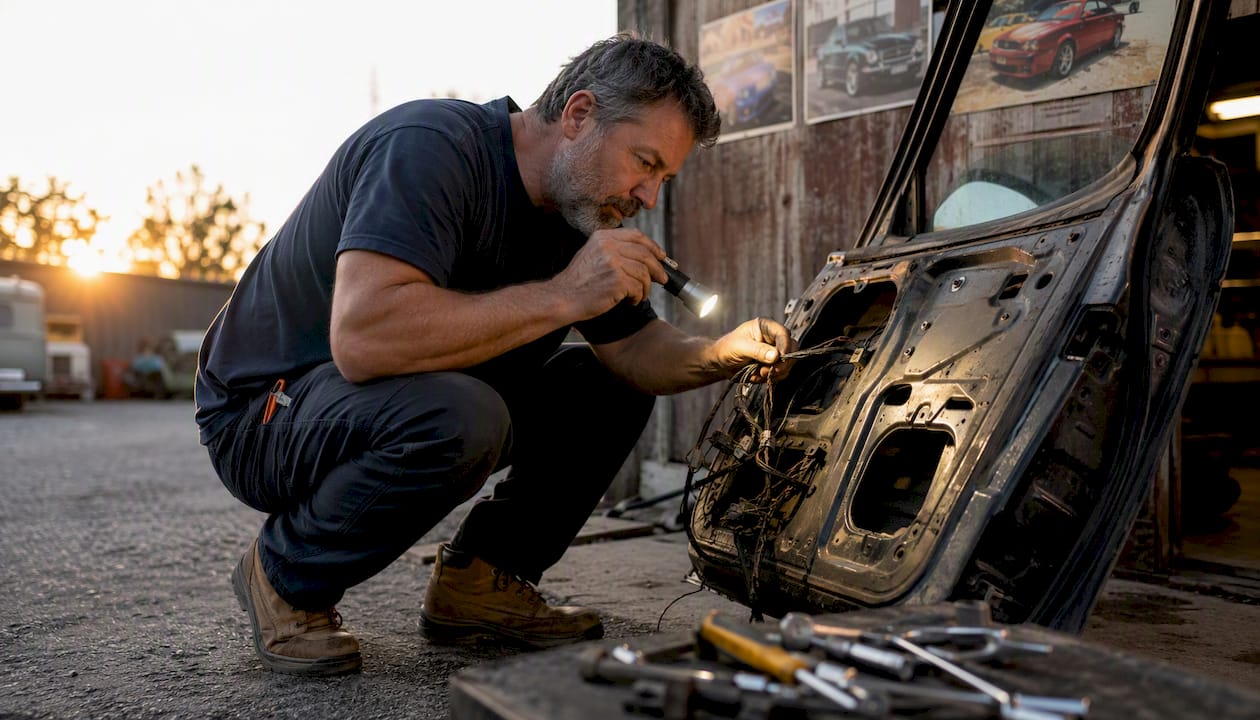
Three categories of defects most commonly produce recall or product liability claims. A design defect means the vehicle’s blueprint itself is flawed, such as a fuel system that routes lines too close to heat sources across an entire model run. A manufacturing defect is a production error on a specific unit, like a torque spec missed on an axle bolt during assembly. A failure to warn claim arises when a manufacturer knew about a hazard and did not notify owners promptly, which is exactly the conduct NHTSA’s complaint-to-recall process is designed to catch.
Call a defective product lawyer after an injury, after two or more failed repair attempts for the same problem, or once your vehicle has spent 30 cumulative days in the shop within the first 18 months or 18,000 miles. Those thresholds are not arbitrary: they trigger the Song-Beverly lemon-law presumption in California. Waiting past the AB 1755 deadline, which requires filing within one year of warranty expiration, can permanently bar your claim.
How does a recall lawyer investigate and prove your case?
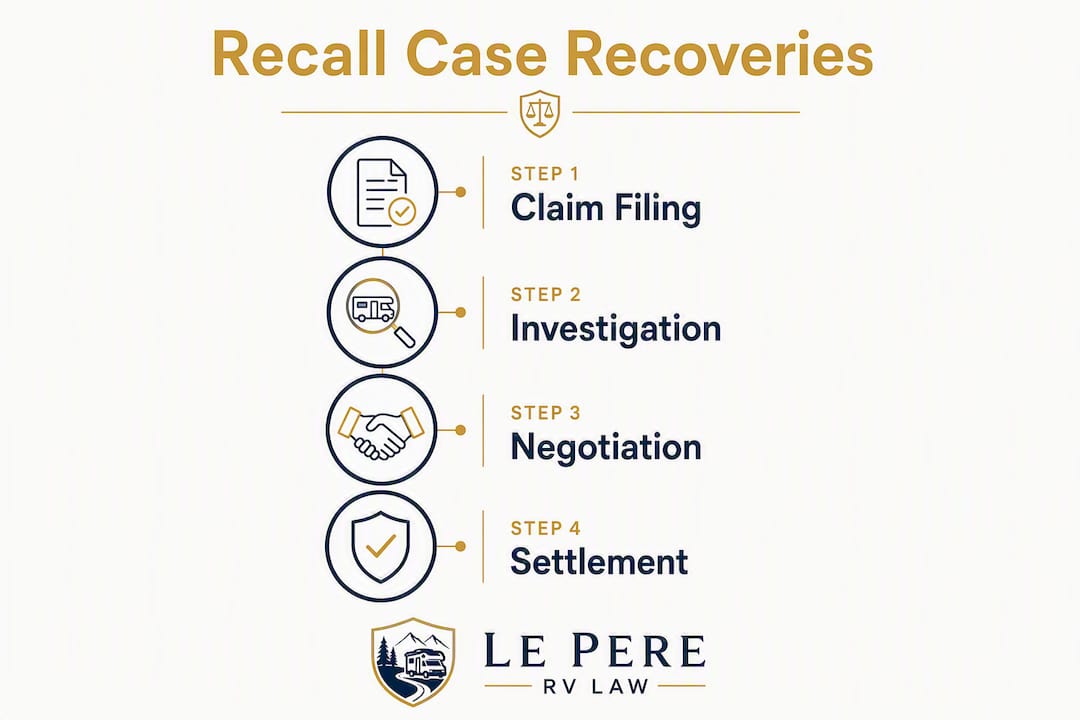
A recall lawyer builds your case by collecting repair records, defect and recall notices, expert reports, and by mapping liability to the manufacturer, parts supplier, dealer, or distributor responsible for the harm. The investigation follows a clear sequence.
- Intake and file preservation. The attorney documents the vehicle’s history, secures your repair orders, and sends a preservation letter to the dealer to prevent destruction of service records.
- Medical and repair records collection. All treatment records, invoices, and diagnostic reports are gathered and organized by date to establish a timeline of the defect and its consequences.
- VIN and recall history lookup with NHTSA. A VIN-based recall check confirms whether an open recall exists, when the manufacturer notified NHTSA, and whether a remedy has been completed or is still pending.
- Expert retention. Engineering experts or accident reconstruction specialists review the vehicle and the defect to establish causation, particularly in injury cases where the manufacturer will contest the link between the defect and the harm.
- Causation and damages analysis. The attorney maps the defect to the specific injury or property loss, quantifies economic and non-economic damages, and determines whether civil penalties apply.
Your attorney also sends prelitigation notices where required. Under California Code of Civil Procedure § 871.24, the manufacturer receives 30 days to offer restitution or replacement before civil penalties become available. Missing that procedural step can eliminate the penalty claim entirely.
Gather these documents before your first call: your VIN, all repair orders, dealer communications, any mailed recall notice, photos of the defect or damage, medical records, and contact information for any witnesses.
Pro Tip: Request a VIN-based NHTSA recall lookup before your first attorney meeting. If the dealer refused to perform a recall repair or told you parts were unavailable, document that refusal in writing. Documented dealer refusals are among the strongest evidence points in a recall injury file.
What recoveries are available in recall and product liability cases?
Remedies include vehicle repurchase or replacement, cash damages for injury and property loss, reimbursement for prior repairs, and in California, civil penalties against manufacturers who willfully ignored their warranty obligations. The specific recovery depends on the type of claim and the applicable statute.
Under the Song-Beverly Act, California consumers can pursue a repurchase or refund that covers the full purchase price, finance charges, registration fees, and incidental costs, minus a mileage offset for use before the first repair attempt. A replacement vehicle of comparable value is an alternative when the consumer prefers to stay in a similar model. Where the defect caused physical injury or property damage beyond the vehicle itself, economic and non-economic damages are available under negligence or strict product liability theories.
Owners who paid out of pocket for repairs later covered by a recall may be eligible for reimbursement, but manufacturers often impose strict documentary deadlines and require original receipts. Collecting those records before they are lost or discarded is critical. Most recall repairs themselves are provided at no cost to the consumer regardless of warranty status, and Consumer Reports notes that safety recall repairs are typically free for cars up to 15 years from the date of first sale.
The civil penalty provision is California-specific and significant. When a manufacturer willfully fails to honor its warranty, a court can award up to two times actual damages on top of the base recovery. That multiplier requires proper prelitigation notice under CCP § 871.24 and proof of willfulness, which is why attorney involvement early in the process matters.
On fees: your attorney’s compensation comes from a statutory fee award or settlement proceeds paid by the manufacturer or dealer, not from your pocket. You owe nothing if the case does not resolve in your favor. For a plain explanation of how settlement options work under California law, that resource covers repurchase versus replacement mechanics in detail.
How do you choose the right recall lawyer?
Choose a recall lawyer with documented experience in recall and lemon-law claims, trial experience if the case goes to court, RV expertise when your vehicle is a motorhome or trailer, and a contingency-fee practice so your interests stay aligned.
Hiring checklist:
- Confirmed experience with product liability and recall-specific claims, not just general personal injury
- Track record in lemon-law or recall settlements, with case examples available on request
- Direct attorney-client contact, not a case manager or paralegal as your primary point of contact
- Written contingency fee agreement with clear terms on who pays costs if the case does not settle
- Documented results in RV claims when your vehicle is a motorhome, fifth wheel, or travel trailer
Questions to ask at your first meeting:
- Who will handle my file day to day, and will I speak directly with the attorney?
- What similar recall or RV cases have you handled, and what were the outcomes?
- How do you charge, and who covers expert and filing costs if we lose?
- What evidence do you need from me right now to preserve the claim?
- Have you defended manufacturers? What did that experience teach you about how they respond?
That last question matters more than it sounds. An attorney who spent years on the manufacturer’s side knows which arguments the defense will lead with, which experts they typically retain, and where the file is weakest before it is filed.
Red flags to watch for: any firm that charges an upfront intake fee, gives vague answers about fee structure, cannot name the experts it uses in recall cases, or makes specific outcome promises. Guarantees of recovery percentages are prohibited under professional conduct rules and signal a firm more interested in signing clients than evaluating claims. A focused firm with direct attorney contact is a meaningful structural advantage in recall litigation.
What should you do right now after an injury or recall notice?
Immediately preserve records, get medical care, and avoid repairing or replacing damaged parts without counsel if you plan to seek reimbursement or pursue a product liability claim.
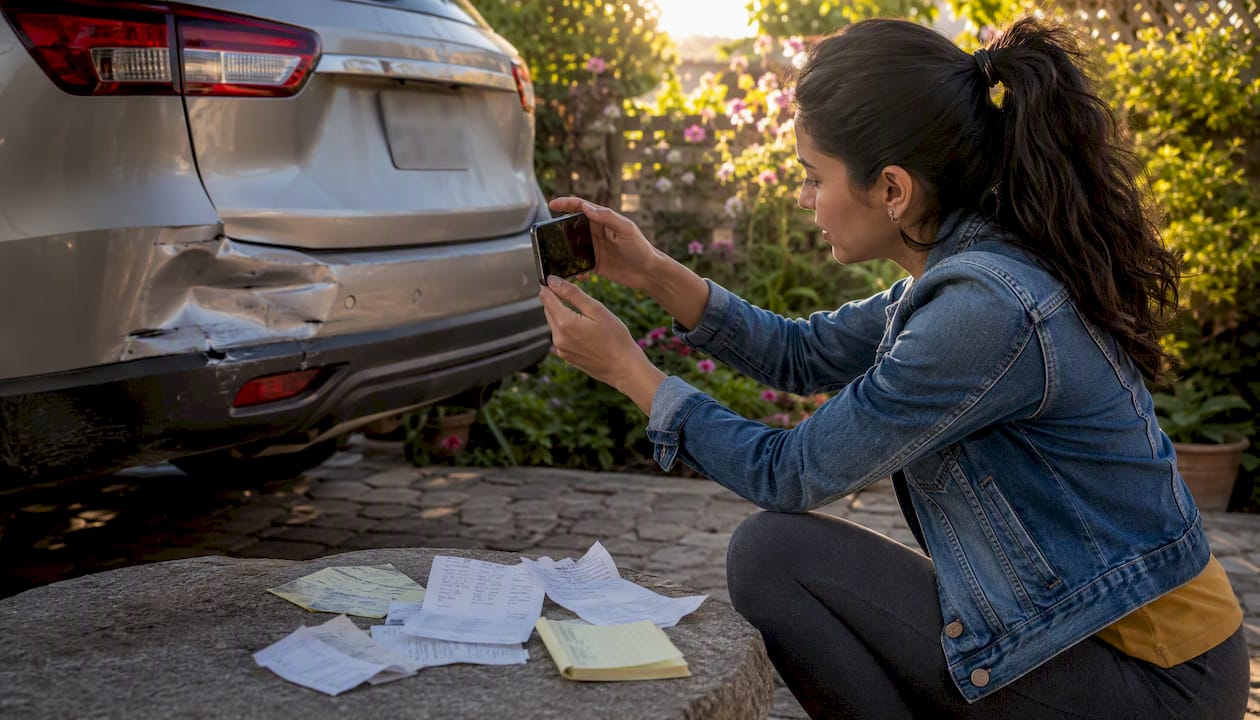
Take photos of the damage or defect before anything is repaired. Save every repair order, invoice, and dealer communication in one place. Locate your VIN on the dashboard or door jamb and pull a copy of any mailed recall notice. Then report the safety issue to NHTSA directly. NHTSA logs every consumer complaint and those reports can support both the agency’s investigation and your legal file.
Seek medical attention promptly if you were injured. Courts and insurers look at the gap between an incident and the first medical visit; a delay is routinely used to argue the injury was not serious or was caused by something else. Get records of every visit.
On timing repairs: if the recall remedy is free and available at your dealer, coordinate with your attorney before paying out of pocket for any related repair. Paying for a repair the manufacturer was obligated to cover can complicate reimbursement requests, and some manufacturers impose short windows for those claims with strict documentary requirements.
Pro Tip: Create one folder, digital and physical, labeled with the date of the first incident. Drop every repair invoice, photo, dealer letter, and recall notice into it immediately. When you call for a case review, that folder cuts intake time significantly and helps the attorney spot the strongest evidence fast.
Why Le Pere RV Law is built for recall and defective vehicle claims
Le Pere RV Law focuses on RV and auto lemon-law claims across California and handles every case on contingency, so clients pay nothing upfront regardless of how the case resolves.
Jeff Le Pere has approximately 25 years of consumer protection and lemon-law experience, including 11 years as a defense attorney representing manufacturers and dealerships. That defense background is the firm’s clearest differentiator. He built manufacturer cases for over a decade, which means he knows precisely which arguments the other side will raise, which documents they will request, and where a consumer’s file is vulnerable before it is ever filed. That insight shapes how the firm investigates cases and negotiates settlements.
The firm’s flagship focus is RV lemon law, covering motorhomes, fifth wheels, and travel trailers. RVs are more legally complex than cars and trucks: they carry multiple warranties across chassis, appliance, and coach components, and most lemon-law firms decline them entirely. The Law Offices of Jeffrey Le Pere handles them specifically. The firm also covers auto lemon law for cars, trucks, and SUVs, plus dealer fraud cases involving vehicles sold as certified when they were not.
Clients speak directly with the attorney, not a case manager. That is a deliberate structural choice. Jeff Le Pere was the senior managing attorney at a high-volume lemon-law firm and saw firsthand how large operations prioritize case throughput over individual client outcomes. The Law Offices of Jeffrey Le Pere is built differently. Time-sensitive deadlines, including AB 1755’s one-year filing window after warranty expiration and Song-Beverly’s 30-day and repair-attempt thresholds, are tracked from the first intake call.
Key legal rules that govern recall and lemon-law claims
Federal recall rules require manufacturers to notify owners and provide free remedies. California law adds lemon-law presumptions and civil-penalty pathways that can substantially increase what a consumer recovers.
What federal law requires
Under the National Traffic and Motor Vehicle Safety Act, manufacturers must notify registered owners of safety defects by first-class mail within 60 days of notifying NHTSA and must provide a remedy at no cost. NHTSA monitors recall completion and can order recalls through the courts when manufacturers resist. Importantly, federal law explicitly states that recall remedies do not replace other legal remedies. You can pursue a recall repair and still file a separate legal claim for injuries or damages.
California Song-Beverly thresholds
California’s lemon-law presumption under California Civil Code § 1793.22 applies when a vehicle has been out of service for warranty repairs for a cumulative 30 days or more within the first 18 months or 18,000 miles, or when the same nonconformity has been repaired four or more times (two times if the defect is likely to cause death or serious injury). Meeting those thresholds shifts the burden to the manufacturer to prove the vehicle is not a lemon.
Civil penalties under CCP § 871.24 require a formal 30-day prelitigation notice to the manufacturer before the consumer can seek penalties in court. The manufacturer then has 30 days to offer restitution or replacement. If it refuses or ignores the notice, the court can award up to two times actual damages. Failure to send that notice on time is one of the most common reasons a civil penalty claim fails.
| Threshold or Deadline | Rule |
|---|---|
| NHTSA owner notice | Manufacturer must notify within 60 days of notifying NHTSA |
| Song-Beverly days in shop | 30 cumulative days within first 18 months or 18,000 miles |
| Song-Beverly repair attempts | 4 attempts (2 for safety-related defects) |
| Civil penalty prelitigation notice | 30 days for manufacturer to respond before penalties apply |
| AB 1755 filing deadline | Within 1 year of warranty expiration |
Pro Tip: Send the prelitigation notice as early as the file supports it. Waiting until the eve of filing to send the 30-day notice is a common mistake. The earlier the notice goes out, the sooner the clock runs on the manufacturer’s response window, and the stronger the civil penalty argument becomes at trial.
Key Takeaways
A defective or recalled vehicle can entitle you to a full repurchase, replacement, cash damages, and civil penalties under California law, all pursued on contingency with no upfront cost to you.
| Point | Details |
|---|---|
| Song-Beverly thresholds | 30 cumulative days in shop or 4 repair attempts within 18 months or 18,000 miles triggers the lemon-law presumption. |
| Civil penalty notice | A 30-day prelitigation notice to the manufacturer is required before civil penalties of up to two times actual damages become available. |
| Evidence to collect now | Gather your VIN, all repair orders, dealer communications, recall notices, photos, and medical records before your first attorney call. |
| Federal recall rights | NHTSA requires manufacturers to notify owners within 60 days and provide a free remedy; a recall does not waive your right to sue for injuries. |
| The Law Offices of Jeffrey Le Pere | Handles RV and auto lemon-law claims on contingency with direct attorney contact and 11 years of manufacturer-defense experience informing every case. |
What most recall lawyers miss about the manufacturer’s playbook
Most recall attorneys approach these cases from one direction: the consumer’s file. They gather repair orders, confirm the recall notice, and wait for the manufacturer to respond. That is a reasonable approach, but it leaves money on the table.
Manufacturers do not evaluate recall injury claims in good faith from the start. They evaluate them for exposure. The defense team looks immediately at whether the prelitigation notice was sent correctly, whether the repair records are complete enough to establish the threshold, and whether the consumer’s attorney knows enough about the manufacturer’s internal documentation practices to request the right Technical Service Bulletins and field reports. If the answer to any of those questions is no, the manufacturer’s position hardens.
Eleven years of defending manufacturers taught me exactly how that evaluation works. The first thing a manufacturer’s attorney does after receiving a demand is check whether the consumer’s lawyer has actually read the TSBs for that model. If they have not, the defense knows the file is thin. The second thing they check is whether the prelitigation notice was procedurally correct under CCP § 871.24. A notice with a defect in it is treated as no notice at all.
The practical implication for anyone choosing a recall lawyer is this: ask specifically whether your attorney has experience on the defense side, and ask what TSBs or internal manufacturer documents they plan to request. A vague answer to either question tells you something important about how that firm will handle your case when the manufacturer pushes back.
Schedule your free case review with The Law Offices of Jeffrey Le Pere
If your vehicle was recalled, repeatedly repaired for the same defect, or caused an injury, you have legal options that go well beyond waiting for the manufacturer to act. The Law Offices of Jeffrey Le Pere offers a free, no-commitment case review for California vehicle and RV owners. You speak directly with the attorney, not a screener.
At the consultation, Jeff Le Pere reviews your VIN and recall history, evaluates your repair records and any medical documentation, identifies which Song-Beverly thresholds apply to your situation, and outlines the likely remedies and next steps for evidence preservation. Representation is contingency-based: the manufacturer or dealer pays attorney fees when the case resolves in your favor, and you owe nothing if it does not. Everything you share is confidential.
Request a free case review for your RV, car, truck, or SUV today. If your situation involves dealer misconduct alongside a recall or warranty dispute, the firm also handles dealer fraud claims under California law.
Useful sources for recall and lemon-law research
The most reliable sources for recall and lemon-law information are NHTSA’s recall database, the California Song-Beverly statute, CCP § 871.24, and authoritative consumer guides.
Recall lookup and federal rules:
- NHTSA recall lookup by VIN — use this first to confirm whether your vehicle has an open recall and whether the remedy has been completed
- NHTSA Motor Vehicle Safety Defects and Recalls — federal overview of recall authority, manufacturer obligations, and NHTSA’s monitoring role
- NHTSA consumer complaint process — explains how a consumer complaint becomes a formal investigation and recall
- Check to Protect recall FAQs — plain-language answers on recall repair costs and dealer availability
- Consumer Reports car recall guide — practical guidance on recall notices, free repair windows, and tracking fixes
California legal code references:
- California Civil Code § 1793.22 — Song-Beverly lemon-law presumption thresholds (30 days, 18 months or 18,000 miles, repair attempts); cite this statute when tracking your own deadlines
- California Code of Civil Procedure § 871.24 — civil penalty mechanics and the 30-day prelitigation notice requirement; this is the statute your attorney must follow to preserve the penalty claim
- California Attorney General — vehicle recall and safety — state-level overview of recall rights and how to check recall status
Firm practice pages:
- California RV lemon law — Le Pere RV Law’s primary landing page for RV and auto recall claims
- California lemon law: consumer rights overview — explains Song-Beverly advantages and what the statute actually gives you
This article is general legal information, not legal advice for your specific situation. Statutes, deadlines, and eligibility rules change. Confirm current rules with NHTSA, the California Legislature’s official code pages, or a qualified California consumer protection attorney before making decisions about your claim.