Proof Attorneys Use to Win Odometer Rollback Claims in California
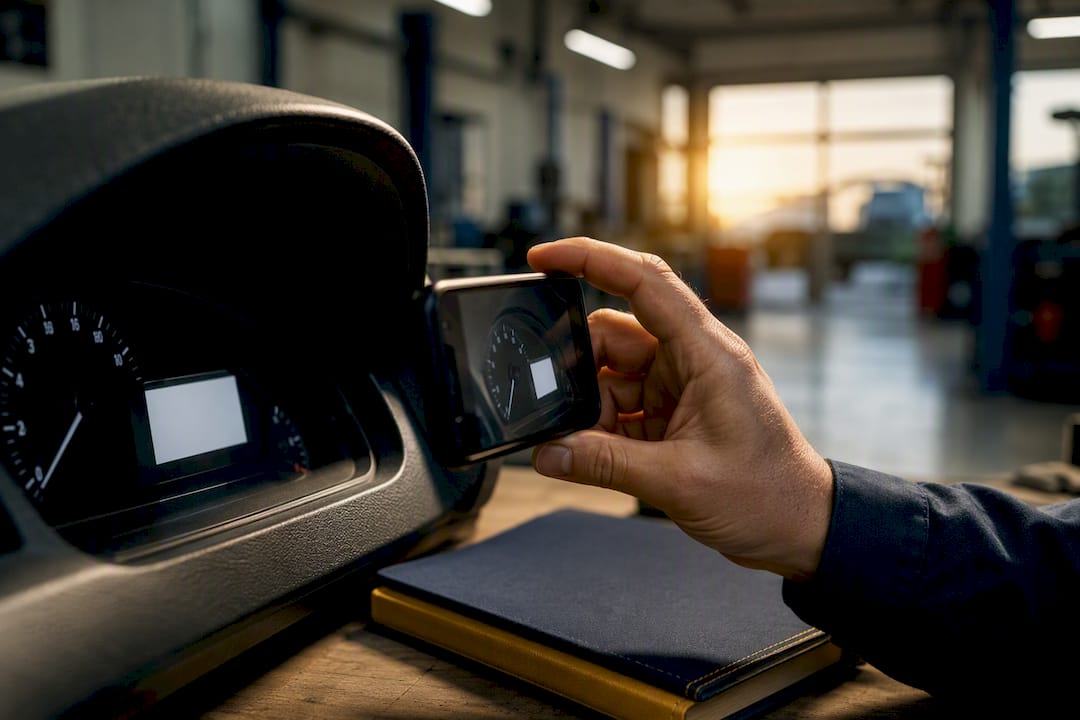
Yes, odometer rollback is illegal in California under multiple Vehicle Code sections, and you may be entitled to a refund, a replacement vehicle, or civil penalties on top of actual damages. If you suspect rollback, stop relying on the odometer reading, photograph the dash and VIN, pull the title history, and request a free case review before evidence disappears or a filing deadline passes.
TL;DR:
- Odometer rollback violations in California can lead to criminal fines, civil damages, and dealer license suspensions, especially if the dealer knowingly sold a tampered vehicle.
- Building a case requires collecting vehicle history reports, prior mileage disclosures, service records, telematics data, and timestamped photos to establish discrepancies.
- Early action, including photographing the odometer and VIN, gathering documents, and filing a complaint with the DMV, is crucial due to record retention and statute limits.
- Dealer defenses often rely on blaming prior owners or lack of documentation, but strong proof can include service logs, telematics data, and prior title disclosures.
- Legal representation on a contingency basis can help recover damages without upfront costs, but prompt investigation and documentation are essential for success.
Table of Contents
- What Does California Law Say About Odometer Rollback?
- What Remedies Exist for Odometer Fraud in California?
- How Do You Prove an Odometer Was Rolled Back?
- What Should You Do Right Now If You Suspect Rollback?
- When Should You Contact an Attorney About Odometer Fraud?
- What Dealer Defenses Come Up in Odometer Fraud Cases?
- How The Law Offices of Jeffrey Le Pere Handles Odometer Fraud Claims
- Primary Sources to Verify Your Rights
- Sources
- FAQ
What Does California Law Say About Odometer Rollback?
California Vehicle Code makes odometer tampering a straightforward legal violation, not a gray area. Section 28051 states it is unlawful to disconnect, turn back, advance, or reset a vehicle’s odometer with intent to change the mileage it displays, a rule FindLaw’s summary of the statute confirms applies to any motor vehicle in the state. The full text of the Vehicle Code’s odometer article covers the related sections, including §28051.5, which extends liability to anyone who knowingly conspires in the tampering.
Section 28053 addresses the one legitimate way an odometer reading can legally not reflect a car’s full history. When a broken odometer is replaced and the new unit cannot display the old mileage, the installer must set it to zero and attach a written notice to the left doorframe stating the prior mileage and the replacement date. No notice, no zeroed unit, and a mismatched mileage reading is a red flag, not a technicality.
Dealers face an additional layer of exposure. Vehicle Code §11713.18 bars advertising or selling a used vehicle as “certified” when the dealer knows or should have known the odometer is unreliable or has been altered. Federally, the Truth in Mileage Act requires accurate mileage disclosure on every title transfer, and NHTSA enforcement backstops California’s own rules.
What Remedies Exist for Odometer Fraud in California?
California odometer fraud carries three distinct tracks of consequences: criminal, civil, and administrative, and you don’t have to pick just one. Criminal exposure under §28051 can mean fines and, in more serious or repeat cases, longer-term penalties, since intentional odometer tampering is treated as a fraud offense rather than a paperwork error.
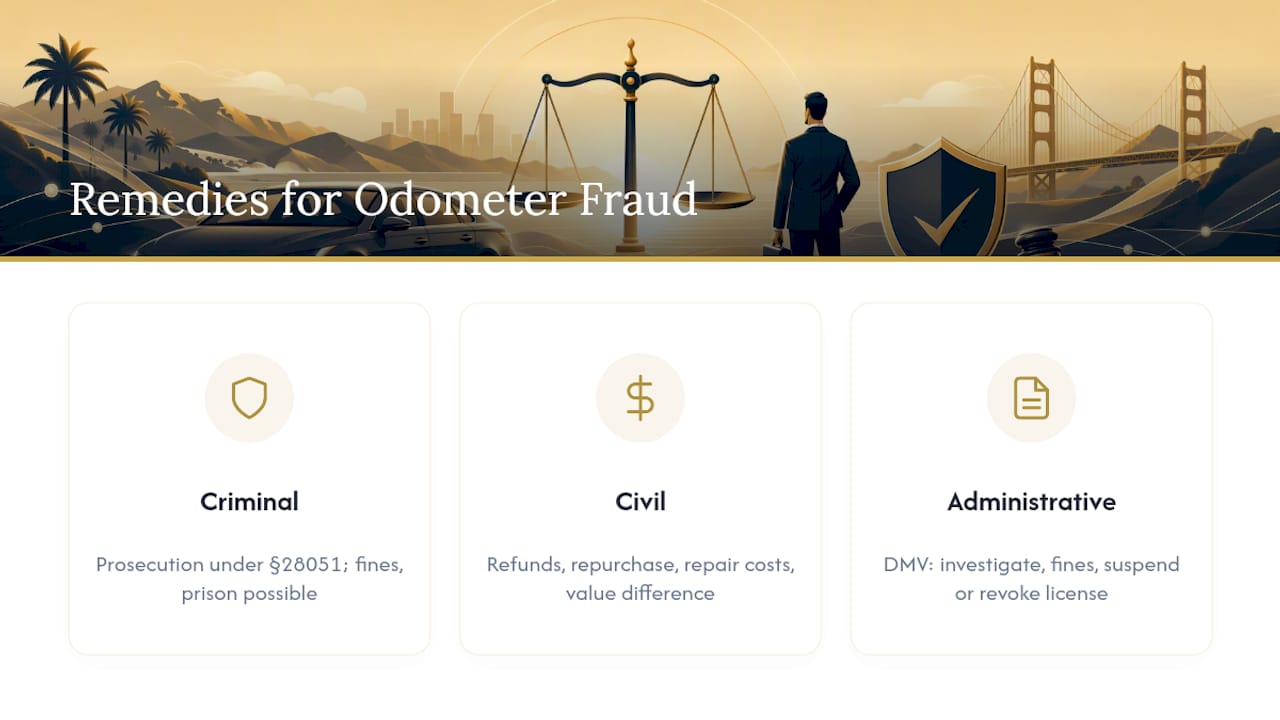
The civil track is usually where victims recover money. A fraud claim, a Consumers Legal Remedies Act claim, or an Unfair Competition Law claim can each support recovery of a refund or repurchase, the cost of repairs tied to the vehicle’s true condition, and the difference between what you paid and what the car was actually worth with its real mileage. When a dealer sold the car as “certified” despite known tampering under §11713.18, that violation strengthens a CLRA or UCL claim considerably, since it gives you a direct statutory hook instead of relying on general fraud elements alone. Courts can also award civil penalties on top of actual damages in cases involving willful conduct.
The administrative track runs through the DMV, which can investigate dealer misconduct, issue fines, and suspend or revoke a dealer’s license. That’s a parallel path to your own civil case, not a substitute for it. For readers untangling whether their situation is closer to dealer fraud or a warranty defect, it helps to review the difference between dealer fraud and lemon law claims before deciding which claim to pursue.
How Do You Prove an Odometer Was Rolled Back?
Proving odometer rollback comes down to building a paper and data trail that contradicts the number on the dash. A vehicle history report is usually the fastest place to start, since mileage mismatches between service visits, inspections, and title transfers often show up as flagged discrepancies the moment you run the VIN.
From there, the strength of your case depends on how much documentation you can assemble:
- Title odometer disclosure statements from every prior transfer, since federal and state law both require accurate mileage entries at sale
- Prior registration records showing mileage reported to the DMV at renewal
- Service and repair orders from dealerships or independent shops, which log mileage at each visit
- Telematics data or digital mileage logs if the vehicle has connected services or a manufacturer app
- Inspection stickers with handwritten or printed mileage notations
- Timestamped photographs of the odometer display and the VIN plate
Pro Tip: Request service records directly from the dealership or manufacturer, not just from the seller. Dealer service systems often log mileage automatically at every visit, creating a record that’s much harder to dispute than a private seller’s paperwork.
Preserve everything digitally the moment you suspect a problem. Screenshot telematics dashboards, save PDF copies of every document, and avoid returning a leased or dealer-loaner vehicle before you’ve captured its current mileage and condition.
What Should You Do Right Now If You Suspect Rollback?
Acting quickly protects both the evidence and your legal options, since dealer records get purged and vehicles change hands. Work through these steps in order:
- Photograph the odometer and VIN today. Timestamped images establish what the car showed at the moment you discovered the discrepancy.
- Stop driving the vehicle if the rollback suggests a safety issue, such as skipped maintenance intervals tied to the true mileage.
- Gather your title, bill of sale, and any financing paperwork, since these documents often contain the mileage disclosure that later gets contradicted.
- Run a vehicle history report using the VIN to check for mileage inconsistencies across prior sales and inspections.
- File a complaint with the California DMV, describing the vehicle, the seller or dealer, the discrepancy you found, and every document you’re attaching.
- Request the dealer’s service and repair records for the vehicle, which may show mileage entries that contradict the current reading.
- Contact a California attorney for a free case review, bringing every document above along with any witness statements from mechanics or prior owners.
Don’t sit on this list. California’s AB 1755 shortened certain filing windows for related vehicle claims, and civil odometer fraud claims carry their own statutes of limitations that start running from the date of discovery, not the date of sale.
When Should You Contact an Attorney About Odometer Fraud?
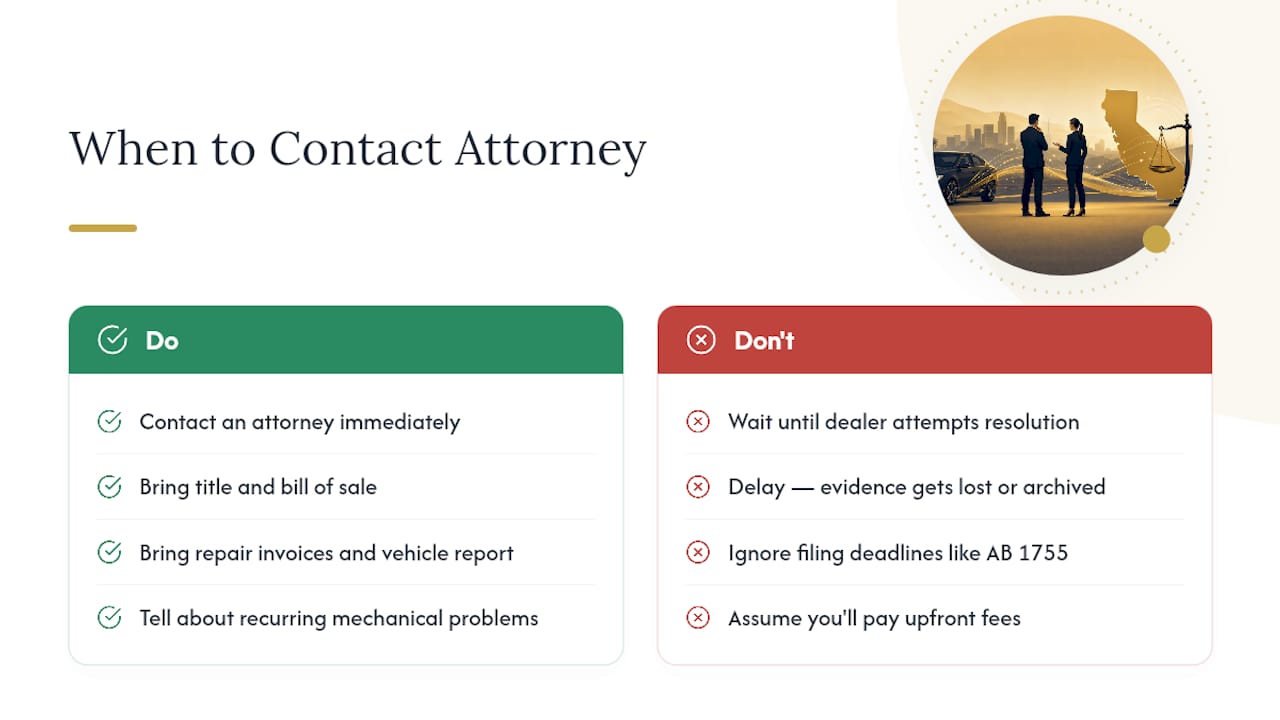
Contact an attorney as soon as you suspect rollback, not after you’ve tried to resolve it with the dealer yourself. Early legal involvement matters because evidence has a shelf life: dealer service records get archived or lost, prior owners become harder to track down, and filing deadlines under statutes like AB 1755 don’t pause while you gather your thoughts.
Representation in these cases typically runs on contingency, meaning you pay no attorney fees upfront and the firm only gets paid if you recover money, often through statutory fee shifting that requires the dealer or manufacturer to cover legal costs when you win. That structure exists precisely so cost never stops a legitimate claim from moving forward.
Bring your title, bill of sale, any repair invoices, and your vehicle history report to an intake conversation. If you’re also dealing with recurring mechanical problems on the same vehicle, it’s worth reviewing how mileage offsets work in a repurchase claim, since rollback and warranty issues sometimes overlap on the same car.
What Dealer Defenses Come Up in Odometer Fraud Cases?
Dealers rarely admit to tampering outright. The most common defense is blaming a prior owner or a third party, claiming the dealership had no knowledge the mileage was altered before the car reached their lot. Another frequent tactic is pointing to gaps in service records and arguing there’s no proof the odometer was ever accurate in the first place.
Eleven years spent defending manufacturers and dealerships taught me exactly how those defenses get built, because I used to build them. The strongest counter is usually documentary: service records, telematics data, and prior title disclosures that show the dealer knew or reasonably should have known about the discrepancy before advertising the car as certified. Organize your records early, save digital data before it’s overwritten, and expect these cases to take time. Willfulness is often the real fight, not whether tampering happened.
— Jeff Le Pere
How The Law Offices of Jeffrey Le Pere Handles Odometer Fraud Claims
Legal services can provide California owners a direct path to recovery without relying on high-volume “lemon law mill” model approaches where cases get handed off to case managers instead of attorneys. Representation often runs on contingency, so you pay nothing upfront and the firm only gets paid if you recover a refund, a replacement, or a settlement.

A free case review starts with the same documents outlined above: your title, bill of sale, any repair invoices, and a vehicle history report if you’ve already pulled one. From there, the firm evaluates whether your claim fits a CLRA or UCL theory, whether §11713.18 applies because the car was sold as certified, and whether filing deadlines like AB 1755 are already running against you. If you’re weighing whether your situation is dealer fraud, a lemon law issue, or both, the California RV dealer fraud practice page walks through how those claims typically get evaluated. Reach out today for a free, no obligation case review and find out exactly what your odometer rollback claim could be worth.
Primary Sources to Verify Your Rights
Confirm the statutes directly rather than relying on secondhand summaries. The California Vehicle Code’s odometer provisions cover §§28051 through 28053, and §11713.18 governs certified-vehicle advertising. For the mechanics of proper mileage disclosure during a sale, Loturn’s odometer disclosure statement guide breaks down the required forms and exemptions.
Sources
- Codes Display Text — Article 10. Odometers 28050 - 28053
- California Code, Vehicle Code - VEH § 28051 | FindLaw
- Odometer Fraud in California: Laws, Penalties, and Legal Options - LegalClarity
FAQ
Is Odometer Rollback a Crime in California?
Yes, California Vehicle Code §28051 makes it unlawful to disconnect, turn back, advance, or reset an odometer with intent to alter the displayed mileage, and violations carry criminal exposure alongside civil liability.
Can I Sue a Dealer for Selling Me a Car With a Rolled Back Odometer?
Yes, you can pursue a civil claim under fraud, the CLRA, or the UCL, and if the dealer advertised the car as certified despite known tampering, that violates Vehicle Code §11713.18 and strengthens your claim.
What Compensation Can I Recover for Odometer Fraud?
Recoverable damages can include a refund or repurchase, repair costs, the diminished value of the vehicle, and civil penalties in cases involving willful conduct, though outcomes depend on the specific facts of each case.
How Do I File a Complaint About Odometer Tampering in California?
File a complaint with the California DMV describing the vehicle, the seller or dealer involved, and the mileage discrepancy, and attach supporting documents like your title, service records, and vehicle history report.
How Long Do I Have to File an Odometer Fraud Claim in California?
Deadlines vary by claim type, and related consumer vehicle laws like AB 1755 have shortened certain filing windows, so contacting an attorney promptly after discovering the discrepancy protects your options.
Does The Law Offices of Jeffrey Le Pere Handle Odometer Rollback Cases?
Yes, The Law Offices of Jeffrey Le Pere represents California owners in dealer fraud claims involving odometer rollback on a contingency basis, meaning there are no attorney fees unless you recover compensation.