One Year Filing Deadline for California RV Magnuson Moss Claims

California RV owners have two separate legal tools working together: the Song-Beverly Consumer Warranty Act covers the chassis and motor, while the Magnuson-Moss Warranty Act covers habitation components and other consumer goods sold with a written warranty. Depending on the defect, you may recover a repurchase, a replacement RV, cash restitution, incidental damages, or a civil penalty worth up to twice your actual damages under California Civil Code §1793.2, §1793.22, and 15 U.S.C. §2310.
TL;DR:
- The Magnuson-Moss Warranty Act covers coach components like slide-outs and appliances, but only if the part has a written warranty and the manufacturer failed to repair it after reasonable attempts.
- Chassis-related defects such as engine or transmission failures are typically covered under the Song-Beverly lemon law, which defines a “new motor vehicle” to include the driveline components.
- Owners need to document all repair attempts and send notice to both chassis and coach manufacturers separately to preserve rights and avoid disputes.
- The California lemon law presumes a defect if there are four or more repair attempts or more than 30 days out of service within 18 months or 18,000 miles, requiring the manufacturer to prove otherwise.
- Filing deadlines are critical: a claim must be filed within one year after the warranty expires or after the owner hits the repair attempts threshold, making prompt action essential.
Table of Contents
- Which RV Parts Does Magnuson-Moss RV Coverage Actually Reach?
- What Remedies Can You Actually Recover in California?
- How Do California’s RV Lemon Law Deadlines and Thresholds Work?
- When Should You File a Federal Magnuson-Moss Claim Instead?
- What Documents Do You Need to File an RV Lemon Law Claim?
- Why an RV-Focused Lemon Law Attorney Handles These Claims Differently
- What California RV Owners Get Wrong About These Claims
- Start Your Free RV Lemon Law Case Review Today
- Sources
- FAQ
Which RV Parts Does Magnuson-Moss RV Coverage Actually Reach?
The Magnuson-Moss RV question comes down to one dividing line: is the defective part attached to the drivetrain, or is it part of the living space? Song-Beverly, California’s lemon law, defines a “new motor vehicle” to include the chassis, drivetrain, and other components integral to a motorhome’s operation as a vehicle. Habitation systems, meanwhile, get pulled in through a specific carve-out in the statute rather than through the main new-vehicle definition.
The Magnuson-Moss Warranty Act works differently. It does not distinguish between chassis and coach at all. Instead, it applies to any written warranty on a consumer product, which means the slide-out mechanism, the roof air conditioner, the water heater, and dozens of other coach components each fall under the manufacturer’s or component maker’s own written warranty terms. If that warranty exists and the part fails to conform after a reasonable repair effort, 15 U.S.C. §2301 et seq. lets you sue for damages and equitable relief.
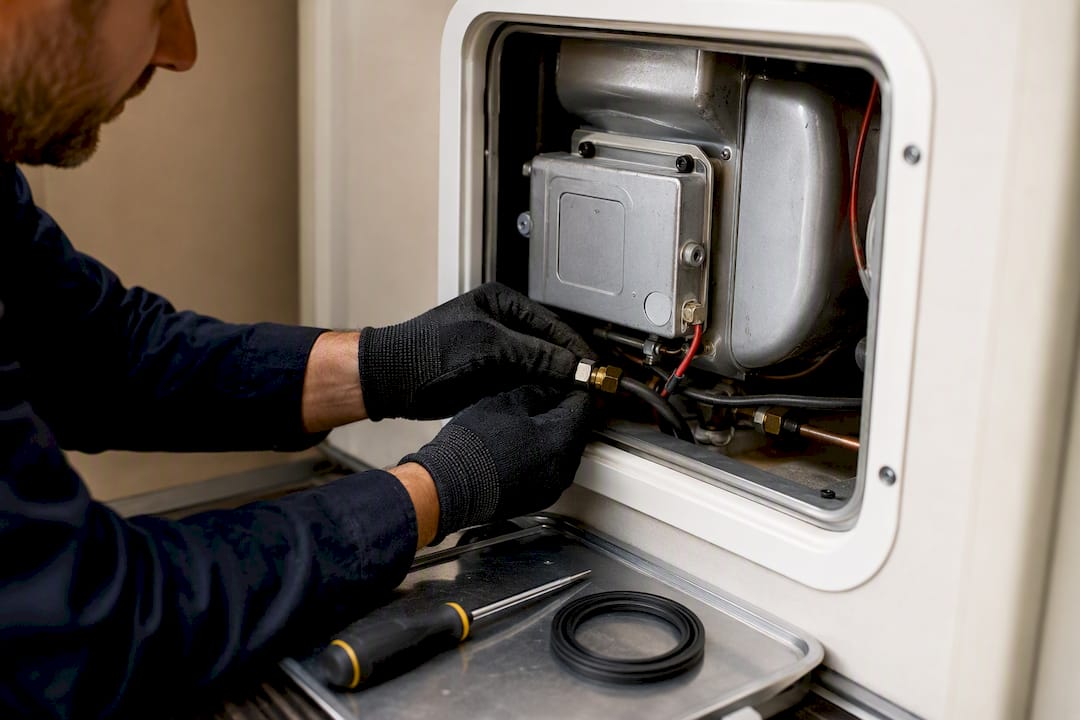
This split matters because it determines who you name in a demand letter or complaint. A failed transmission points to the chassis manufacturer, whether that’s Ford, Freightliner, or Mercedes-Benz Sprinter on a Class B or Class C build. A leaking roof seam or delaminating slide-out points to the coach builder, like Thor, Forest River, or Winnebago. A defective refrigerator or furnace often points to the component manufacturer directly, such as Dometic or Suburban.
Common defect-to-defendant mapping looks like this:
- Engine, transmission, or brake failures typically name the chassis manufacturer under Song-Beverly’s new motor vehicle provisions.
- Water intrusion, frame flex, or slide-out failures usually name the coach builder and may trigger Magnuson-Moss habitation coverage.
- Appliance or electrical system defects frequently name the individual component manufacturer under its own written warranty.
- Multiple simultaneous failures across systems often require naming two or three defendants in a single complaint.
A breakdown of the six most common motorhome defect categories shows how often these lines blur in practice, since a single water leak can cascade into electrical, structural, and appliance failures that touch every defendant at once.
What Remedies Can You Actually Recover in California?
You can recover a full repurchase, a replacement RV, cash restitution, incidental damages, and potentially a civil penalty of up to two times your actual damages. Which remedy applies depends heavily on what kind of RV you own and which statute governs the defective part.
Under §1793.2, if the manufacturer cannot conform the goods to warranty after a reasonable number of repair attempts, it must replace the vehicle or refund the purchase price minus a deduction for your use before the first repair visit. Here is the detail most owners never hear from a dealership: for travel trailers and the habitation portions of motorhomes, the buyer gets to elect reimbursement instead of accepting a replacement. That buyer-election language shifts real leverage into your hands during settlement talks, because the manufacturer cannot force a swap-out unit on you if you’d rather have your money back.
What a repurchase or restitution payout typically includes:
- The full purchase price, including sales tax, license fees, and registration costs.
- Incidental damages such as towing, alternate lodging, or storage fees tied to the defect.
- A deduction for mileage or use only up to the point of the first repair attempt.
Fee-shifting matters more than most owners realize. Under 15 U.S.C. §2310, a prevailing Magnuson-Moss plaintiff can recover attorney fees and costs based on actual time expended. That provision is why contingency representation works: the manufacturer, not you, generally ends up covering the legal bill when the claim succeeds.
Civil penalties add another layer. When a manufacturer willfully refuses to comply with its warranty obligations, courts can award a penalty of up to twice the actual damages on top of the repurchase or restitution amount.
How Do California’s RV Lemon Law Deadlines and Thresholds Work?
California’s presumption of a lemon kicks in once your RV hits one of three thresholds within 18 months of delivery or 18,000 miles, whichever comes first. Meeting a threshold does not guarantee a win, but it shifts the burden onto the manufacturer to prove otherwise.
- Four or more repair attempts for the same nonconformity after you’ve given notice to the manufacturer.
- Two or more repair attempts for a defect likely to cause death or serious injury, a lower bar reserved for safety issues like steering, braking, or structural failures.
- More than 30 cumulative days out of service for warranty repairs, and this count does not need to be consecutive, according to California Civil Code §1793.22.
That 30-day threshold trips up more RV owners than any other, because RV repairs routinely stretch for weeks while parts get shipped from out-of-state suppliers. Add up every day your rig sat at a dealership or service center for a warranty repair, even across unrelated visits, and you may cross the line faster than you’d expect. Our guide to calculating the 30-day repair shop threshold walks through exactly how to total those days from repair orders.
Pro Tip: Keep every repair order, even for problems that seem minor. Manufacturers routinely contest lemon status even after you’ve hit a statutory threshold, and a thin paper trail is the easiest way to lose that fight.
One more deadline deserves attention: AB 1755 shortened the window for filing a lemon law claim, requiring consumers to file within one year of the warranty’s expiration date. Waiting to “see if it gets worse” is the single most common reason owners lose an otherwise strong claim.
When Should You File a Federal Magnuson-Moss Claim Instead?
File a Magnuson-Moss claim when the defect involves a component covered by its own written warranty, especially on towable RVs where Song-Beverly’s new motor vehicle protections don’t fully apply. Since travel trailers and fifth wheels have no engine or chassis of their own, the strongest path for many of those defects runs through federal warranty law rather than the state’s motor vehicle statute.
To bring a viable MMWA claim you need two things: a written warranty covering the failed part, and a repair history showing the seller or manufacturer failed to make it conform after a reasonable opportunity to fix it. FTC guidance on federal warranty law confirms this scope and lays out the disclosure obligations manufacturers owe consumers up front.
Remedies under Magnuson-Moss lean toward cash. Courts often award diminution in value or straight damages rather than ordering a replacement, particularly when multiple small component failures make a clean swap-out impractical.
The strategic advantages run deeper than most owners assume:
- You can join the chassis manufacturer, coach builder, and component maker in a single federal complaint rather than filing three separate state actions.
- Federal venue sometimes offers procedural advantages unavailable in state court, depending on the defendants and amount in controversy.
- The fee-shifting provision in 15 U.S.C. §2310 applies regardless of which remedy you ultimately win, which keeps pressure on manufacturers to settle rather than litigate small-dollar component disputes.
Legislative momentum is also worth watching. AB 1849’s committee analysis proposes expanding the definition of “new motor vehicle” to include certain non-motorized travel trailers and fifth wheels, which would extend stronger state-law remedies to towables that currently rely more heavily on Magnuson-Moss.
What Documents Do You Need to File an RV Lemon Law Claim?
Start by sending written notice to the manufacturer at the address listed in your warranty booklet or owner’s manual, describing the defect and your repair history in plain terms. Direct notice is often required before certain remedies become available, so skipping this step can delay or weaken your claim.
- Gather every repair order from every visit, even ones that seem unrelated, and note the date the RV went in and came out of service each time.
- Photograph the defect at each stage, especially water intrusion, structural damage, or anything that visibly worsens between visits.
- Collect your VIN and chassis number along with the coach’s separate serial number, since RVs often carry two identifying numbers tied to two different manufacturers.
- Pull your warranty booklets for the chassis, the coach, and any major appliances, since each may carry different terms and different notice addresses.
- Identify every likely defendant, because RV cases frequently involve chassis, coach, and component manufacturers named together in one complaint, and settlement often happens through a pre-suit demand or mediation rather than trial.
Pro Tip: If your RV is under a large motorhome with a Ford, Freightliner, or Mercedes chassis, send notice to both the chassis manufacturer and the coach builder separately. Sending it to only one party can leave the other with an argument that it never received proper notice.
Why an RV-Focused Lemon Law Attorney Handles These Claims Differently
RV cases demand a different skill set than car or truck claims because of the multi-defendant structure and the chassis-versus-habitation split. Jeff Le Pere brings 25 years of lemon law and dealer fraud experience to these cases, including 11 years spent as a defense attorney representing manufacturers and dealerships, which means he has built these defenses from the inside before ever building a claim against them.
Legal representation on a contingency basis means there is no upfront cost to clients regardless of the outcome.
- Legal remedies may include repurchase, replacement, cash restitution, and civil penalties depending on the defect and statute involved.
- Case intake starts with documentation review: repair orders, warranty booklets, and photos.
- Complaints may include multiple defendants such as chassis, coach, and component manufacturers, with negotiation of buyer-election remedies where applicable.
What California RV Owners Get Wrong About These Claims
Most owners assume “lemon law” means one law, one process, one defendant. It doesn’t, and that misunderstanding costs people money every year. The chassis-versus-habitation split isn’t a technicality lawyers invented to sound smart. It exists because Song-Beverly was written with cars and trucks in mind, and RVs got bolted onto that framework awkwardly, one amendment at a time. That’s exactly why AB 1849 exists: lawmakers know towables fall through the cracks of a statute built for vehicles with engines.
The other mistake I see constantly is owners waiting to file because a dealer keeps promising “one more repair will fix it.” Every day spent waiting is a day that counts toward your 30-day threshold, and under AB 1755, it’s also a day closer to a filing deadline you may not know exists. You can generally expect a repurchase, replacement, cash payment, or a civil penalty on a contingency basis, meaning it costs nothing to find out where you stand.
— Jeff Le Pere
Start Your Free RV Lemon Law Case Review Today
Some legal firms use case managers and focus heavily on advertising budgets, while this firm emphasizes direct client-attorney communication and insight from experience defending manufacturers.
Representation runs entirely on contingency. There’s no upfront cost, and the firm only gets paid if your case succeeds through repurchase, replacement, cash settlement, or a civil penalty against a manufacturer that willfully ignored its warranty obligations. If you’re dealing with a defective transmission, a chronic water leak, or a slide-out that’s failed three times, bring three things to your free case review: your repair orders, your warranty booklet, and photos of the defect. Start with the firm’s free case review to find out whether your motorhome, fifth wheel, or travel trailer qualifies. Owners of towables can also look directly at the fifth wheel lemon law page or the travel trailer lemon law page to see how buyer-election remedies apply to their specific rig, or the motorhome lemon law practice page for chassis-based Class A, B, and C claims. If your issue involves fee disputes tied to a broader recovery, this explainer on class action attorney fees from ClaimCow offers useful background on how fee-shifting works in consumer cases generally.
This article is general information, not a substitute for advice from a qualified lawyer. Consult a qualified legal professional about your own circumstances before acting on anything here.
Sources
- 15 U.S.C. §2310: Remedies in consumer disputes
- California Civil Code §1793.22
- California Civil Code §1793.2
- Assembly Bill 1849 committee analysis (AB 1849)
- FTC: Businesspersons’ guide to federal warranty law
FAQ
What Is the New RV Law in California?
California hasn’t replaced its lemon law framework for RVs, but AB 1755 shortened the filing deadline, requiring consumers to file a claim within one year of the warranty’s expiration date. Separately, AB 1849 proposes expanding “new motor vehicle” protections to cover certain non-motorized travel trailers and fifth wheels, though that expansion is still moving through the legislative process.
What Are the Limitations of the Magnuson-Moss Warranty Act?
Magnuson-Moss only applies when a written warranty exists on the defective product, so it offers no help for defects outside any warranty’s scope or timeframe. It also tends to produce cash or diminution-in-value awards rather than a guaranteed replacement, and manufacturers can dispute whether the repair history shows a genuine failure to conform.
What Vehicles Qualify for CA Lemon Law?
Motorhomes generally qualify as new motor vehicles under Song-Beverly because they include a chassis and drivetrain, while habitation portions get separate treatment under §1793.2’s buyer-election language. Travel trailers and fifth wheels without their own motor typically rely more on Magnuson-Moss coverage for component warranties, though AB 1849 could change that if enacted.
Can I Sue Under the Magnuson-Moss Act?
Yes. If a written warranty covers the failed part and the manufacturer hasn’t fixed it after a reasonable number of attempts, 15 U.S.C. §2310 lets you sue for damages and equitable relief, and a prevailing consumer can recover attorney fees. The Law Offices of Jeffrey Le Pere reviews these claims on contingency, so there’s no upfront cost to find out whether your RV qualifies.
How Many Repair Attempts Trigger a Lemon Presumption in California?
Four or more attempts for the same defect, or two or more attempts for a safety-related defect, within 18 months or 18,000 miles, creates a rebuttable presumption under §1793.22. More than 30 cumulative days out of service for warranty repairs during that same window creates the same presumption, even if those days aren’t consecutive.