AB 1755’s 1 Year Deadline: Lawyer Tips for Leased Car Lemon Law Claims
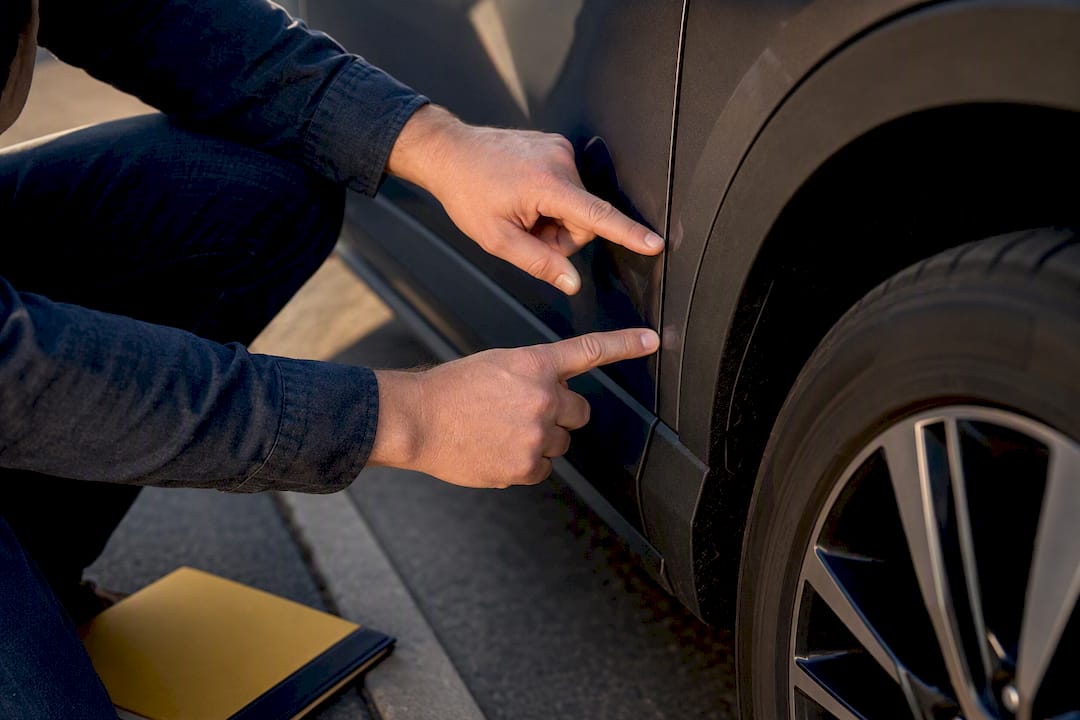
Lemon law applies to leased cars in most states, including California, as long as the vehicle is covered by the manufacturer’s express warranty and used for personal, family, or household purposes. Lessees typically recover a lease buyback, a refund of payments made, or full cancellation of the remaining lease, sometimes with civil penalties added. The clock matters as much as the claim itself. Under California’s AB 1755, some lessees must file within one year of the warranty’s expiration date, so acting fast protects your rights.
TL;DR:
- Leased vehicles under warranty are eligible for lemon law claims in most states, including California, if the defect substantially impairs use, value, or safety.
- Remedial payouts for lease claims include lease buyback, refund of payments, lease cancellation, and possible civil penalties for willful warranty violations.
- State deadlines and thresholds vary, with California’s AB 1755 requiring filing within one year after warranty expiration or six years from delivery, whichever is earlier.
- Timely documentation of defects, repairs, and communications is crucial, especially records created during initial repair attempts and pattern of repeated issues.
- Legal guidance is recommended to navigate filing deadlines, opt-in rules, and dispute processes, with early consultation being key to avoiding claim loss.
Table of Contents
- Does Lemon Law Apply to Leases?
- Leased vs. Purchased: How Remedies and Payouts Differ
- State Rules Vary. Here’s What to Check First
- How to Document Your Leased Car’s Defect Before You File
- Should You Use Arbitration or Hire an Attorney?
- An Attorney’s View: Why Leased-Vehicle Cases Need Early Counsel
- Get a Free Case Review for Your Leased Vehicle
- Sources
Does Lemon Law Apply to Leases?
Yes, lemon law applies to leased vehicles in nearly every state, and California is no exception. Coverage depends on two things: the vehicle must be under the manufacturer’s original express warranty, and the defect must substantially impair the car’s use, value, or safety. It doesn’t matter that a bank or leasing company holds title. What matters is the warranty and the impact of the defect on your daily use of the vehicle.
The Massachusetts Attorney General’s guide to new and leased car lemon law spells this out clearly for its residents, and consumer protection groups report the same pattern nationwide. BBB National Programs confirms that most states cover leased vehicles when the lease is for personal use and the car is new or still under warranty.
A few conditions can complicate a claim:
- Commercial or fleet leases often fall outside standard lemon law protections.
- Certain RV habitation components (plumbing, appliances, slide mechanisms) may fall under separate warranty rules than the drivetrain.
- Aftermarket conversions can muddy which party is responsible for a defect.
Your lease contract itself almost never defeats a valid claim. Manufacturers sometimes argue otherwise, but the warranty, not the financing structure, controls eligibility.
Leased vs. Purchased: How Remedies and Payouts Differ
Leased-car claims follow a different payout formula than purchased-car claims, because there’s no purchase price to refund. Instead, lessees typically recover the lease buyback, a refund of monthly payments and any down payment, reimbursement for repair costs and towing, and cancellation of remaining lease liability. A purchaser gets money back based on what they paid for the car. A lessee gets relief based on what they’ve paid so far and what they’d owe going forward.
Manufacturers usually negotiate directly with the leasing company, since that company holds the title, then settle the consumer’s obligations separately. States account for usage by applying a mileage offset, a deduction tied to how many miles you drove before the defect first appeared. That offset can shrink your recovery if you waited too long to report the problem.
- Lease buyback: manufacturer pays off or absorbs the remaining lease balance.
- Payment refund: down payment and monthly payments already made are returned.
- Lease cancellation: your obligation to the leasing company ends without further payments.
- Civil penalty: added in cases of willful warranty violation, as outcomes from California cases illustrate.
Pro Tip: Don’t assume your remaining lease payments disappear automatically once you report a defect. Get the cancellation in writing before you sign any settlement, or you could still be billed after the fact.
State Rules Vary. Here’s What to Check First
State lemon laws differ enough that a claim strong in one state can stall in another, so check your state’s specific thresholds before assuming coverage. Mileage caps, time limits, and arbitration access all shift from state to state, and those differences decide how fast you need to move.
New York’s fact sheet sets a concrete bar: coverage generally applies within 18,000 miles or two years of delivery, whichever comes first, with arbitration available through the state’s program. Florida uses its own window and puts the lessor, not the lessee, in the position of receiving certain manufacturer payments. A broader look at state-by-state lemon law summaries shows just how much these thresholds swing depending on where you lease.
California’s situation carries a sharper edge. AB 1755 created an opt-in system where manufacturers that filed with the Department of Consumer Affairs face a shortened window: consumers must file suit within one year after the express warranty expires, and no later than six years after the vehicle’s original delivery. If a manufacturer never opted in, older four-year filing rules may still control the deadline instead. That split creates two separate deadline calculations running side by side, and getting the wrong one can cost you the claim entirely.
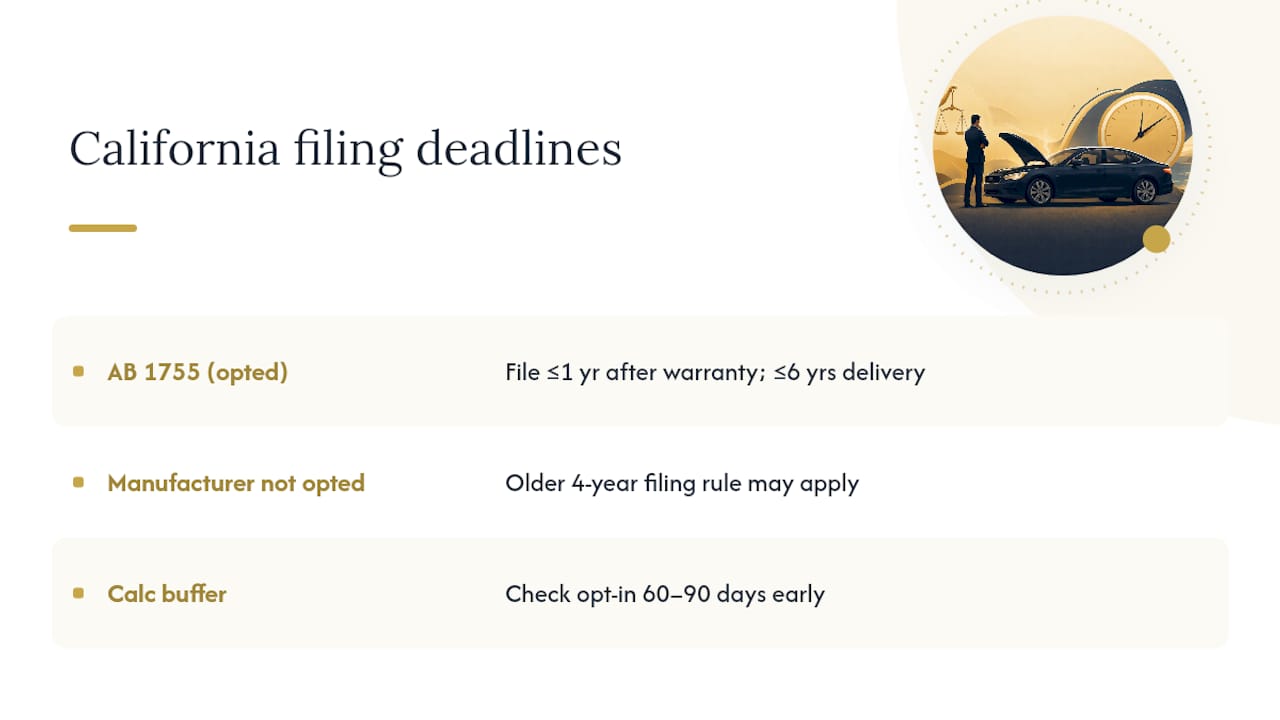
Because the opt-in status changes which deadline applies, calculate your filing window 60 to 90 days before you think it expires. Our AB 1755 deadline guide walks through how to check a manufacturer’s opt-in status before you assume which rule governs your case.
How to Document Your Leased Car’s Defect Before You File
Start documenting the moment a defect first appears, because repair records built after the fact carry far less weight than ones created in real time. Every dated repair order, every mileage reading at drop-off and pickup, and every email or text with the dealer becomes evidence for your claim.
Do this immediately after any repair visit:
- Request a copy of the repair order before you leave the dealership.
- Write down the odometer reading at drop-off and again at pickup.
- Save every text, email, or letter exchanged with the dealer or manufacturer.
- Keep your lease agreement and warranty booklet together in one file.
- Track cumulative days in the shop across all visits, not just the current one.
Most states, including California, look for a pattern: multiple repair attempts on the same defect, or a single defect that keeps your car out of service for an extended stretch, often around 30 cumulative days. The Massachusetts guide recommends the same documentation habits, and that consistency across states isn’t an accident. It reflects what actually holds up in arbitration and court.
Pro Tip: Send your written notice to the manufacturer, not just the dealer. Many state laws require manufacturer notice before certain remedies become available, and a dealer-only complaint can leave that requirement unmet.
Should You Use Arbitration or Hire an Attorney?
Arbitration works for straightforward claims; an attorney becomes necessary when civil penalties, opt-in disputes, or manufacturer pushback enter the picture. Programs like BBB AUTO LINE offer a faster, no-cost path to resolve disputes without going to court, and many manufacturers participate voluntarily.
Arbitration has real limits, though:
- Civil penalties, which can multiply your recovery, are rarely available through arbitration alone.
- Pre-suit notice requirements in several states favor claims prepared with legal guidance.
- Manufacturers can and do dispute delivery dates, opt-in status, and whether a defect is user-caused, arguments that arbitrators don’t always scrutinize closely.
A practical filing timeline looks like this: send your written notice to the manufacturer first, apply to arbitration if your state offers a certified program, then file suit before your statute-of-limitations window closes if arbitration stalls or denies your claim. Waiting until the deadline is near to make that decision is the single most common mistake lessees make.
An Attorney’s View: Why Leased-Vehicle Cases Need Early Counsel
Jeff Le Pere spent 11 years defending manufacturers before shifting to consumer representation, and that experience exposed the exact tactics used to delay or shrink leased-vehicle claims: disputed delivery dates, opt-in arguments, and blaming the driver for a defect. A lemon law attorney working on contingency costs the client nothing upfront, since statutory fees are typically paid by the manufacturer if the case succeeds. The first thing a good attorney checks is your deadline, your opt-in status, and whether your demand letter closes the gaps manufacturers exploit.
— Jeff Le Pere
Get a Free Case Review for Your Leased Vehicle
Some law offices give California lessees direct access to the attorney handling the case, not a rotating cast of case managers. An experienced attorney who previously worked on the manufacturer’s side of these disputes may know which delivery-date arguments, opt-in claims, and days-in-shop disputes manufacturers raise to shrink or delay a payout, and how to counter them from the start.
The firm represents California lessees and owners in auto lemon law claims for cars, trucks, and SUVs, plus the more complex RV cases most firms turn away. Some firms may operate on a contingency basis, meaning there is no cost to the client unless recovery is made. Before your free case review, gather your repair orders, your lease agreement, and your warranty booklet. That review will cover your eligibility, your state deadline, and whether AB 1755’s opt-in rule applies to your manufacturer. Start your free case review today and find out exactly where your leased vehicle stands before your filing window narrows any further.
This article is general information, not a substitute for advice from a qualified lawyer. Consult a qualified legal professional about your own circumstances before acting on anything here.
Sources
- Guide to New and Leased Car Lemon Law
- Is My Leased Vehicle Covered Under Lemon Laws?
- New-car lemon law: fact sheet
- New Lemon Law Deadlines Under AB 1755, Explained