Door Actuator Failure Lemon Law Eligibility in California

Door actuator failure lemon law eligibility is determined by whether the defect substantially impairs your vehicle’s use, safety, or value under California’s Song-Beverly Consumer Warranty Act. A door actuator is the electromechanical component that controls power door locking and unlocking. When it fails repeatedly, you may lose the ability to secure your vehicle or exit safely in an emergency. California law gives you real remedies: a full refund, a replacement vehicle, or a cash settlement. This article explains exactly how door actuator defects qualify, what repair thresholds apply under AB 1755, and what steps to take right now.
What door actuator failures qualify for California Lemon Law?
Door actuator failure qualifies under California Lemon Law when the defect substantially impairs use, safety, or value. That three-part test comes directly from the Song-Beverly Consumer Warranty Act, and courts apply it to every defect claim, including door component failures.
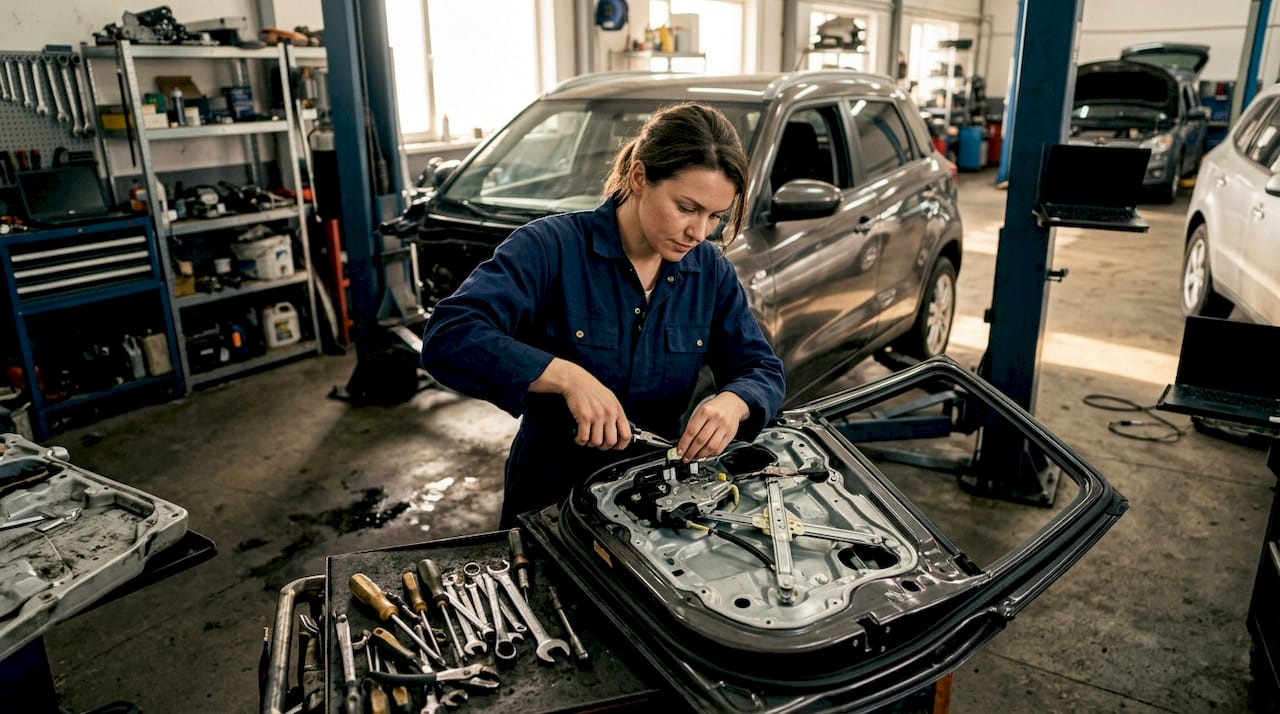
The most common qualifying failures involve the door locking and unlocking mechanism. When a power door lock actuator fails, the door may not lock at all, lock intermittently, or lock and refuse to open from the inside. Each of those outcomes creates a measurable safety risk. Courts treat door lock failures that affect emergency egress or expose the vehicle to theft as safety impairments under Lemon Law, which is the strongest category of substantial impairment.
Qualifying defects typically include:
- A door that will not lock, leaving the vehicle unsecured overnight or in public parking
- A door that locks but cannot be unlocked from the inside, trapping occupants
- Intermittent actuator failure that the dealer cannot reproduce but the owner experiences repeatedly
- A child safety lock actuator that fails, preventing rear-door operation entirely
- Electrical shorts in the actuator circuit that trigger false alarm signals or drain the battery
Non-qualifying defects are those that affect comfort or convenience only. A door actuator that produces a clicking noise but still locks and unlocks reliably does not meet the substantial impairment threshold. A slow-responding actuator that works every time is a nuisance, not a safety defect. The distinction matters because manufacturers will argue the defect is cosmetic whenever they can.
Pro Tip: Keep a written log every time your door actuator fails, including the date, weather conditions, and exactly what the door did or did not do. That log becomes evidence of a pattern, and patterns are what trigger the legal presumption.
California Lemon Law covers new vehicles and used vehicles still under the original manufacturer’s warranty, used primarily for personal, family, or household purposes. A used car sold without any remaining warranty generally falls outside Song-Beverly protections, though other consumer statutes may still apply.
How do repair attempts and timelines affect your claim?
California Civil Code § 1793.22 sets the legal presumption window at 18 months or 18,000 miles, whichever comes first from the date of original delivery. If your door actuator failures occur and are repaired within that window, you are in the strongest position to invoke the lemon presumption.
The repair attempt thresholds work as follows:
- Two or more repair attempts for a defect that is likely to cause serious injury or death. A door that traps occupants or cannot be secured may meet this standard.
- Four or more repair attempts for the same defect that does not rise to the serious-injury level but still substantially impairs use or value.
- 30 or more cumulative days out of service for warranty repairs, even across different defects, triggers the presumption independently.
These thresholds are not suggestions. They are the statutory benchmarks that shift the burden of proof onto the manufacturer. Once you hit one of them, the manufacturer must prove the vehicle is not a lemon, rather than you proving it is.
AB 1755 added procedural requirements that every California owner must follow. You must send written notice to the manufacturer at least 30 days before filing suit. If the manufacturer has opted into the AB 1755 track, mandatory mediation must occur within 150 days. Missing either step can delay or derail your claim.
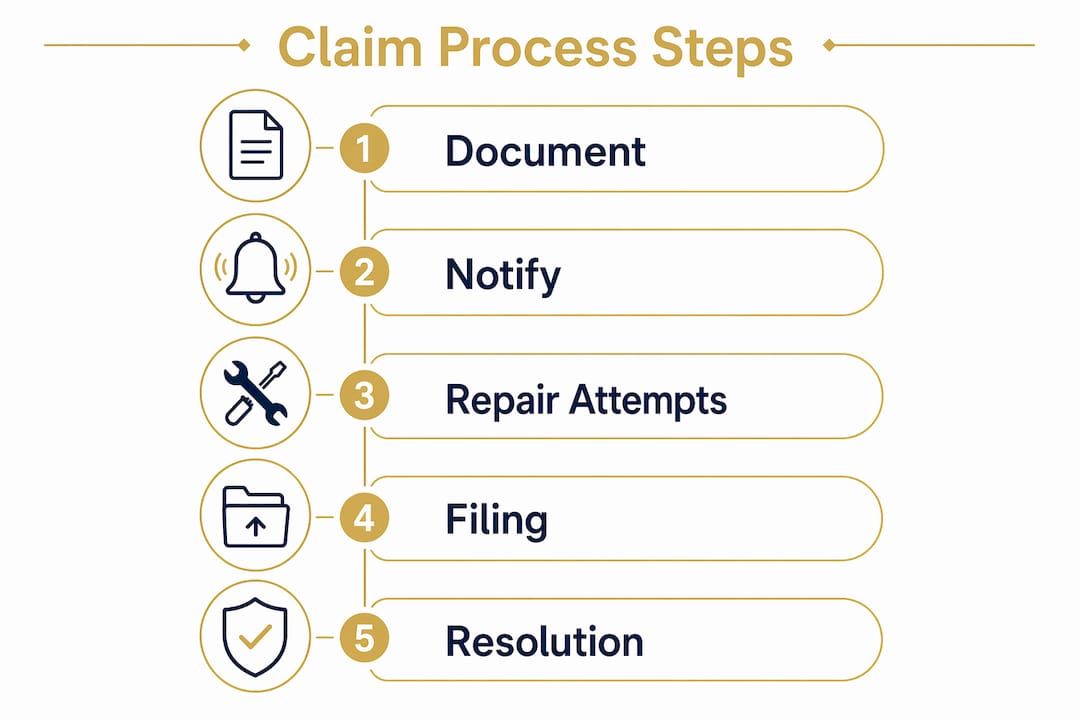
The filing deadline under AB 1755 also changed. For manufacturers who opted into the program, the deadline is one year after warranty expiration, with a six-year cap from the date of vehicle delivery. The older four-year rule no longer applies to those manufacturers. That is a shorter window than most owners realize, and missing it eliminates your claim entirely. You can read more about what happens when the deadline passes to understand the consequences.
Legal experts confirm that consumer rights to refund or replacement remain unchanged under AB 1755. The procedural updates affect timing and process, not the remedies you can recover.
What steps should California residents take to pursue a claim?
The first step is documentation. Every repair visit, every dealer invoice, and every written complaint creates the paper trail that supports your claim. Courts and manufacturers both look for a documented pattern of the same defect recurring despite repair attempts.
Follow these steps to build a strong claim:
- Collect every repair order. Each dealer visit should generate a written repair order. Confirm the defect description matches your complaint exactly. If the dealer writes “no problem found,” request a copy anyway. That notation still counts as a repair attempt.
- Send written notice to the manufacturer. AB 1755 requires this at least 30 days before you file suit. Send it by certified mail to the manufacturer’s customer relations address, not the dealership. State the defect, the repair dates, and the remedy you are requesting.
- Track your out-of-service days. Count every day your vehicle was at the dealership for warranty repairs. Thirty cumulative days triggers the lemon presumption independently of repair attempt counts.
- Contact the California Department of Consumer Affairs. The DCA administers the state’s arbitration program. Some manufacturers require arbitration before litigation, and the DCA process is free to consumers.
- Consult a California Lemon Law attorney. Under Song-Beverly, the manufacturer pays your attorney fees if you win. That means qualified legal representation costs you nothing out of pocket.
Successful claims under Song-Beverly can recover a full refund or replacement vehicle, plus incidental damages such as registration fees, finance charges, and repair costs. When a manufacturer willfully ignored its warranty obligations, the court can award a civil penalty of up to two times your actual damages. You can learn more about what incidental damages cover under California law.
Pro Tip: Request a Technical Service Bulletin search from your dealer at every visit. If the manufacturer issued a TSB for your door actuator problem, that document proves the manufacturer knew about the defect before you complained.
The repair attempt standard guide published by The Law Offices of Jeffrey Le Pere walks through exactly how to count attempts and document each visit correctly.
What common mistakes weaken door actuator Lemon Law claims?
The most damaging mistake is waiting too long to report the defect. Every day you drive with a known actuator problem without a documented dealer visit is a day that does not count toward your repair attempt threshold. Manufacturers track repair histories closely, and gaps in reporting give them room to argue the defect was not serious enough to prompt timely action.
Several other misconceptions regularly undermine otherwise valid claims:
- Confusing cosmetic issues with safety defects. A door actuator that makes noise but functions is not a qualifying defect. A door that will not lock or cannot be opened from the inside is.
- Assuming the dealer’s “no problem found” notation kills the claim. It does not. That notation still documents a repair attempt. Courts recognize that intermittent electrical defects are difficult to reproduce on demand.
- Failing to send the required written notice. Under AB 1755, skipping the 30-day pre-suit notice to the manufacturer is a procedural error that can force you to restart the clock.
- Misunderstanding the warranty coverage window. Failure to report defects within the 18-month or 18,000-mile presumption window does not automatically end your claim, but it does remove the legal presumption and makes the case harder to prove.
- Accepting a dealer repair without confirming the defect description in writing. If the repair order does not accurately describe your complaint, that visit may not count toward the threshold.
Owners of used vehicles sometimes believe they have no options at all. That is not always true. If the vehicle was purchased with remaining manufacturer warranty coverage, used car protections under Song-Beverly may still apply. The distinction between lemon law and dealer fraud claims matters here, and an attorney can clarify which path fits your situation.
Key Takeaways
Door actuator failure qualifies for California Lemon Law protection when it substantially impairs vehicle safety, use, or value and meets the repair attempt thresholds set by California Civil Code § 1793.22 and AB 1755.
| Point | Details |
|---|---|
| Substantial impairment test | The defect must affect safety, use, or value. Door lock failures affecting egress or security qualify. |
| Repair attempt thresholds | Two attempts for safety defects, four for other defects, or 30 cumulative out-of-service days triggers the lemon presumption. |
| AB 1755 deadlines | Send written notice 30 days before filing. File within one year of warranty expiration if the manufacturer opted into AB 1755. |
| Documentation is decisive | Every repair order, written complaint, and out-of-service day builds the case. Gaps in reporting weaken eligibility. |
| Remedies available | Successful claims recover a refund, replacement vehicle, or cash settlement, plus attorney fees paid by the manufacturer. |
What I have learned from 25 years on both sides of these claims
By Jeff Le Pere
Door actuator claims are underestimated by consumers and, frankly, by a lot of attorneys who do not handle them often. When I was defending manufacturers, I watched legal teams dismiss door lock complaints as minor electrical nuisances. That framing was deliberate. If the manufacturer can characterize your actuator failure as an inconvenience rather than a safety issue, they shift the entire burden of proof back onto you.
The single most effective thing I have seen consumers do is document the failure in real time, not after the fact. A photo of a door that will not lock, timestamped on your phone, is worth more than three paragraphs of explanation at a hearing. Manufacturers have sophisticated claims teams. You need a paper trail that is harder to dismiss than a verbal account.
AB 1755 changed the procedural landscape in ways that genuinely catch people off guard. The one-year post-warranty filing deadline is shorter than the old four-year window, and I have seen valid claims evaporate because the owner waited too long. The remedies are still strong. The window to claim them is narrower. That urgency is real.
One more thing: be skeptical of high-volume law firms that assign your case to a case manager you never meet. Door actuator claims require someone who understands how manufacturers evaluate electrical defect patterns. You deserve an attorney who has read your repair orders, not someone who skims a summary. At The Law Offices of Jeffrey Le Pere, every client talks directly to me.
— Jeff Le Pere
The Law Offices of Jeffrey Le Pere: California Lemon Law representation for door actuator defects
If your vehicle’s door actuator has failed repeatedly and the dealer has not fixed it, you may have a valid Lemon Law claim right now.
The Law Offices of Jeffrey Le Pere represents California owners of defective cars, trucks, and SUVs under the Song-Beverly Act. With 25 years of experience, including 11 years defending manufacturers, Jeff Le Pere knows exactly how automakers evaluate and resist door actuator claims. Every case runs on contingency, meaning the manufacturer covers all fees if you win. Visit the firm’s auto Lemon Law page to learn how the firm handles electrical defect cases, or contact The Law Offices of Jeffrey Le Pere directly for a free case review.
FAQ
What makes a door actuator failure qualify under California Lemon Law?
A door actuator failure qualifies when it substantially impairs the vehicle’s use, safety, or value. Failures that prevent locking, unlocking, or emergency egress are treated as safety impairments under Song-Beverly.
How many repair attempts are required for a door actuator Lemon Law claim?
California Civil Code § 1793.22 requires two repair attempts for safety-related defects and four for other defects. Thirty or more cumulative out-of-service days also triggers the legal presumption independently.
Does AB 1755 change the deadline for filing a door actuator Lemon Law claim?
Yes. For manufacturers who opted into AB 1755, the filing deadline is one year after the warranty expires, with a six-year cap from vehicle delivery. The older four-year rule no longer applies to those manufacturers.
Can I file a Lemon Law claim if the dealer said “no problem found”?
Yes. A “no problem found” notation still counts as a documented repair attempt. Courts recognize that intermittent electrical defects like actuator failures are often difficult to reproduce during a dealer inspection.
What can I recover if my door actuator Lemon Law claim succeeds?
A successful claim under Song-Beverly can recover a full vehicle refund, a replacement vehicle, or a cash settlement, plus incidental damages and attorney fees paid by the manufacturer.